News
Community Tuberculosis Awareness Programme Report for World TB Day 2026 by Faculty of Nursing Rama
25 Mar 2026
Event: Extension outreach programme
Event activity: Health Education and Pamphlets Distribution
Theme: “Yes! We Can End TB: Led by Countries, Powered by People”
Mode: Offline
Date: 24.3.2026
Time: 10.00am onwards
Venue: Kukradev, Kanpur
Organized by: Department of Community health Nursing, Faculty of Nursing, Rama University.
Event title: “Creating Awareness, Ending Tuberculosis: World TB Day 2026”
World Tuberculosis Day is observed every year on 24th March to raise awareness about Tuberculosis (TB), one of the world’s deadliest infectious diseases. This day commemorates the discovery of the TB-causing bacterium Mycobacterium tuberculosis by Dr. Robert Koch in 1882, which marked a significant breakthrough in medical science. Despite being preventable and curable, TB continues to affect millions of people globally, especially in developing countries like India. World Tuberculosis Day serves as a platform to educate the public about the causes, symptoms, prevention and treatment of TB, while also promoting early diagnosis and adherence to treatment.
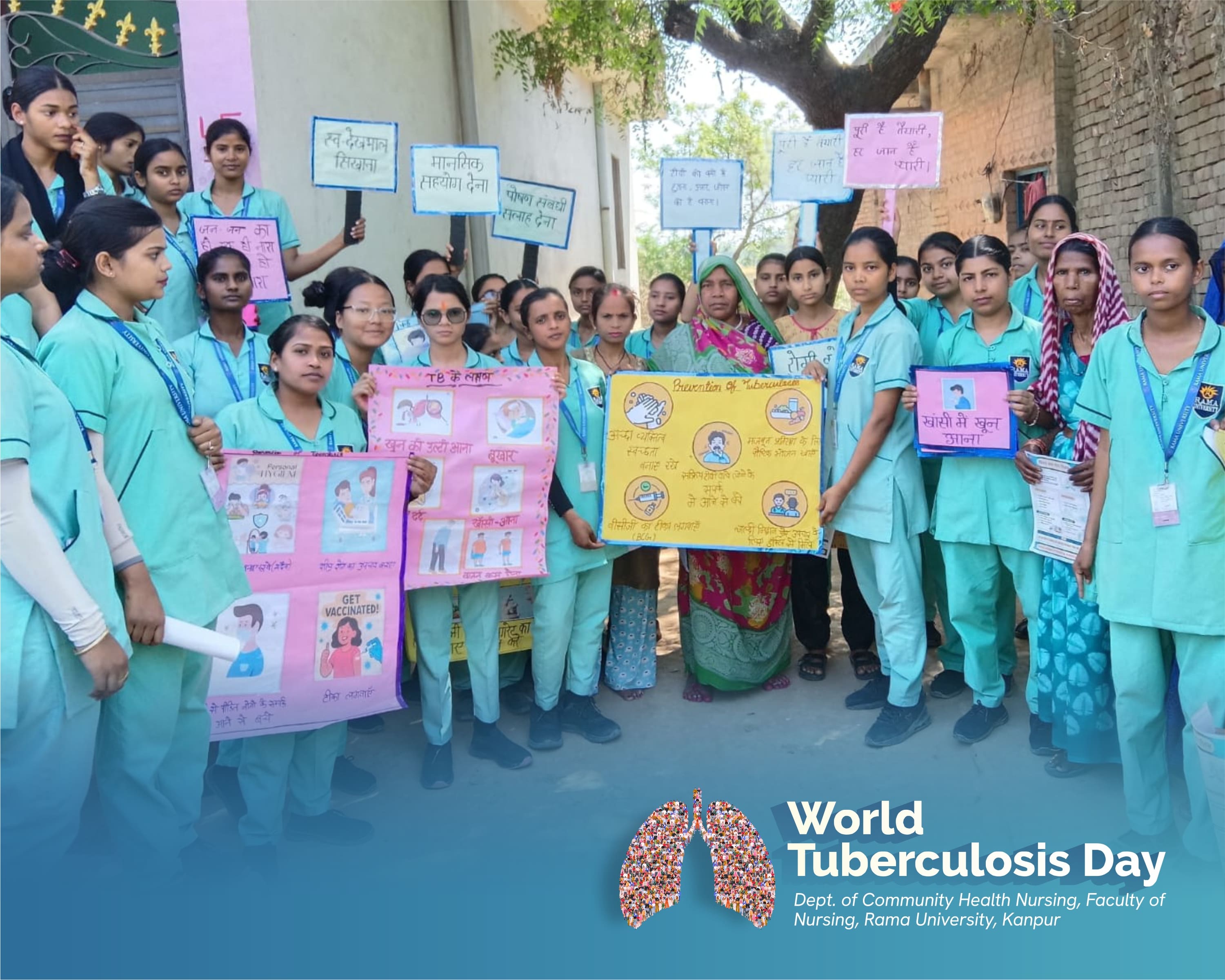
The Faculty of Nursing, Rama University, organized an extension outreach programme in the Kukradev rural community area on the occasion of World Tuberculosis Day. The programme aimed to create awareness about Tuberculosis, promote early detection and encourage treatment adherence among the rural population. The programme was conducted by 1st year GNM, 1st year ANM and 2nd year ANM nursing students under the guidance and supervision of Ms. Jaisika Jatav and Ms. Aparna Shukla as a part of their community health nursing training. The initiative focused on strengthening community participation in TB control and prevention.
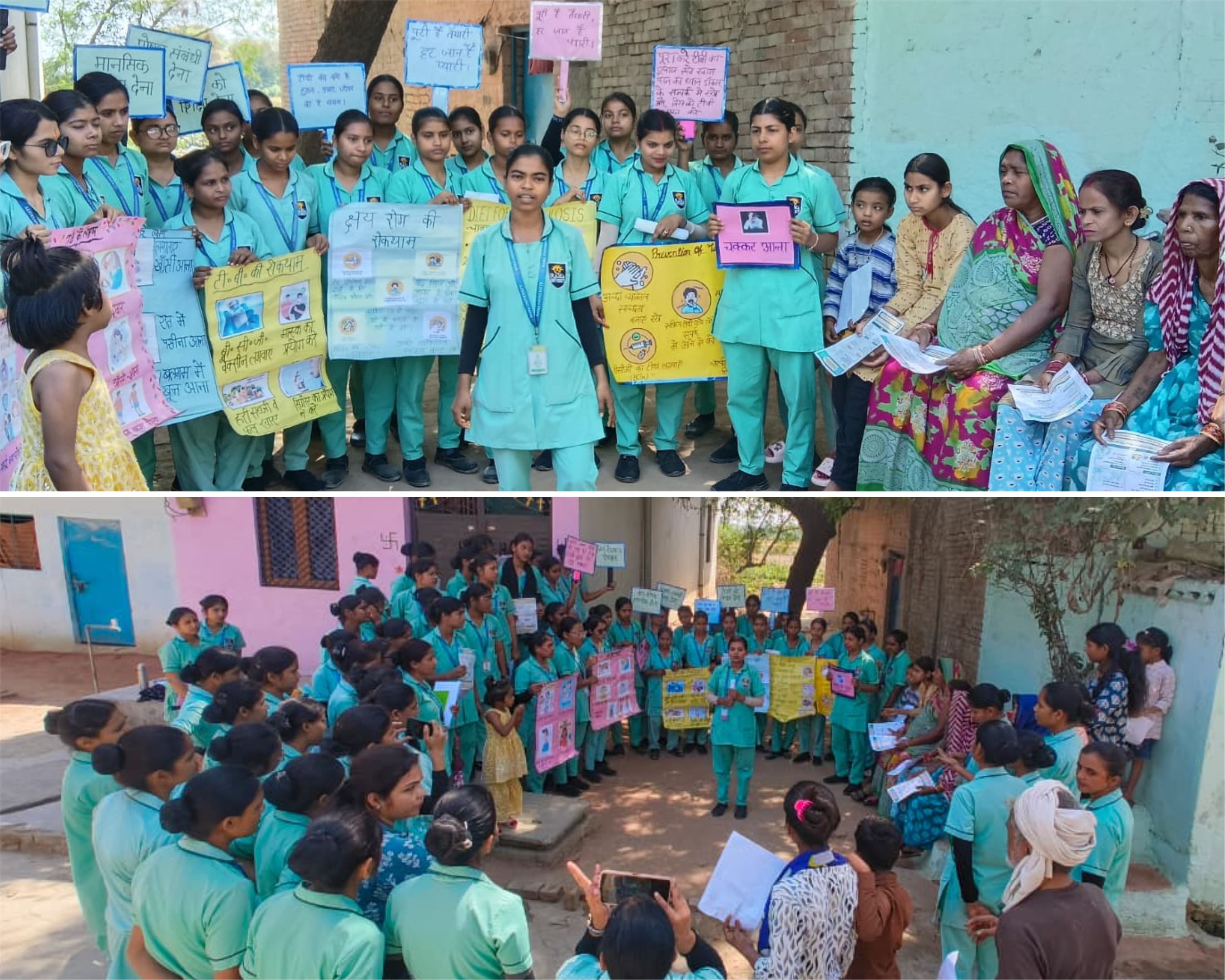
The programme commenced with interaction sessions with the community members where students explained about Tuberculosis, its causes, symptoms such as persistent cough, fever, weight loss and night sweats, modes of transmission, and preventive measures. Special emphasis was given to the importance of early diagnosis and completing the full course of treatment.
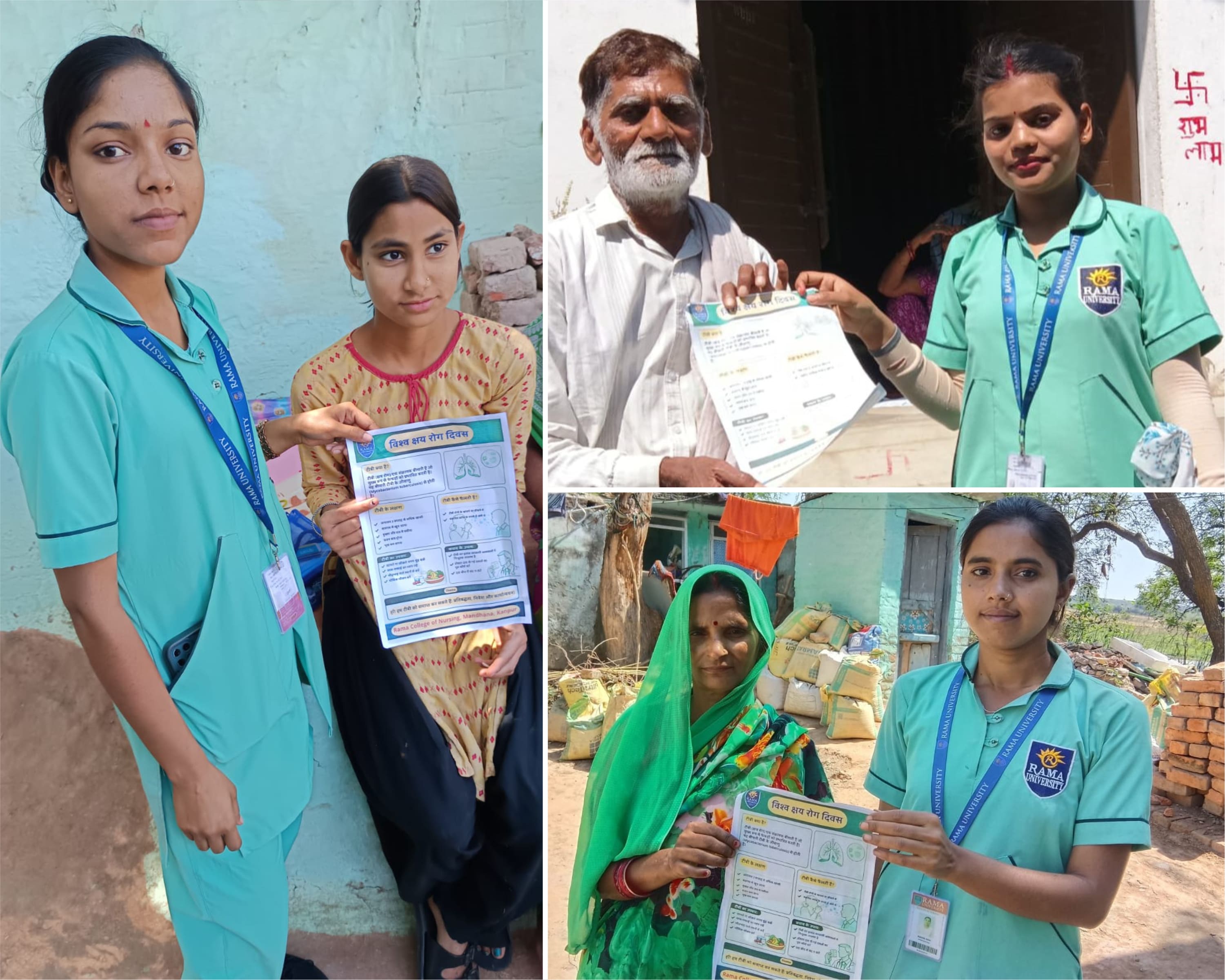
Health education sessions were conducted in small groups to ensure better understanding. The information was delivered in simple and local language, making it accessible to all age groups. Students actively engaged the community through discussions and clarified their doubts regarding TB. Pamphlets containing essential information about TB prevention, treatment and government health services were distributed among the community members. The students also emphasized the availability of free TB diagnosis and treatment services under national health programmes.
The outreach programme highlighted the importance of community-based interventions, as active community participation plays a vital role in early case detection, reducing stigma and improving treatment compliance. Feedback was collected from the community to assess their understanding and effectiveness of the programme. The programme concluded successfully with active participation from the community. It helped in enhancing awareness, reducing misconceptions and encouraging positive health-seeking behaviour among the people. It reinforced the message that eliminating TB is possible through united efforts of healthcare professionals and the community, aligning with the theme “Yes! We Can End TB: Led by Countries, Powered by People.”