News
Day Three Explores Advanced Community Diagnosis and Innovative Needs Assessment in Nursing Education
29 May 2026
Event: 5 Days Faculty Development program-2026
Day: Day-3
Mode: Hybrid
Date: 27th May, 2026
Time: 10:00 am onwards
Theme: “Empowering Nurse Educators: Bridging Education, Practice, Research & Innovations”
Organized by: Faculty of Nursing, Rama University, Kanpur.
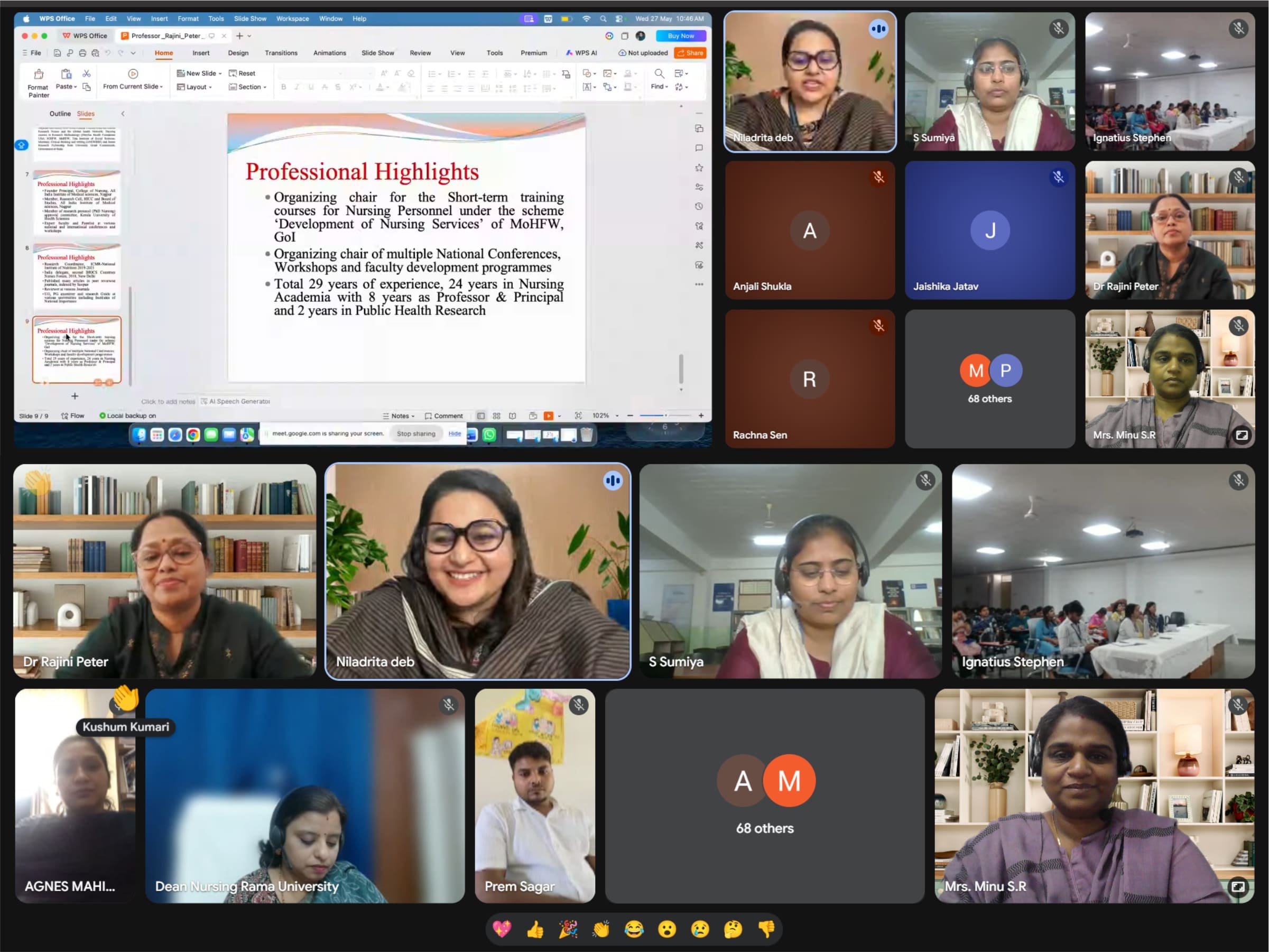
The third day of the Faculty Development Programme was conducted successfully with enthusiastic participation from nursing faculty members, academicians, research scholars, and students through hybrid mode. The session of the day focused on strengthening practical nursing education through advanced community diagnosis and needs assessment approaches in nursing practice. The programme provided valuable insights into innovative community health assessment strategies that can improve competency-based nursing education and healthcare outcomes.
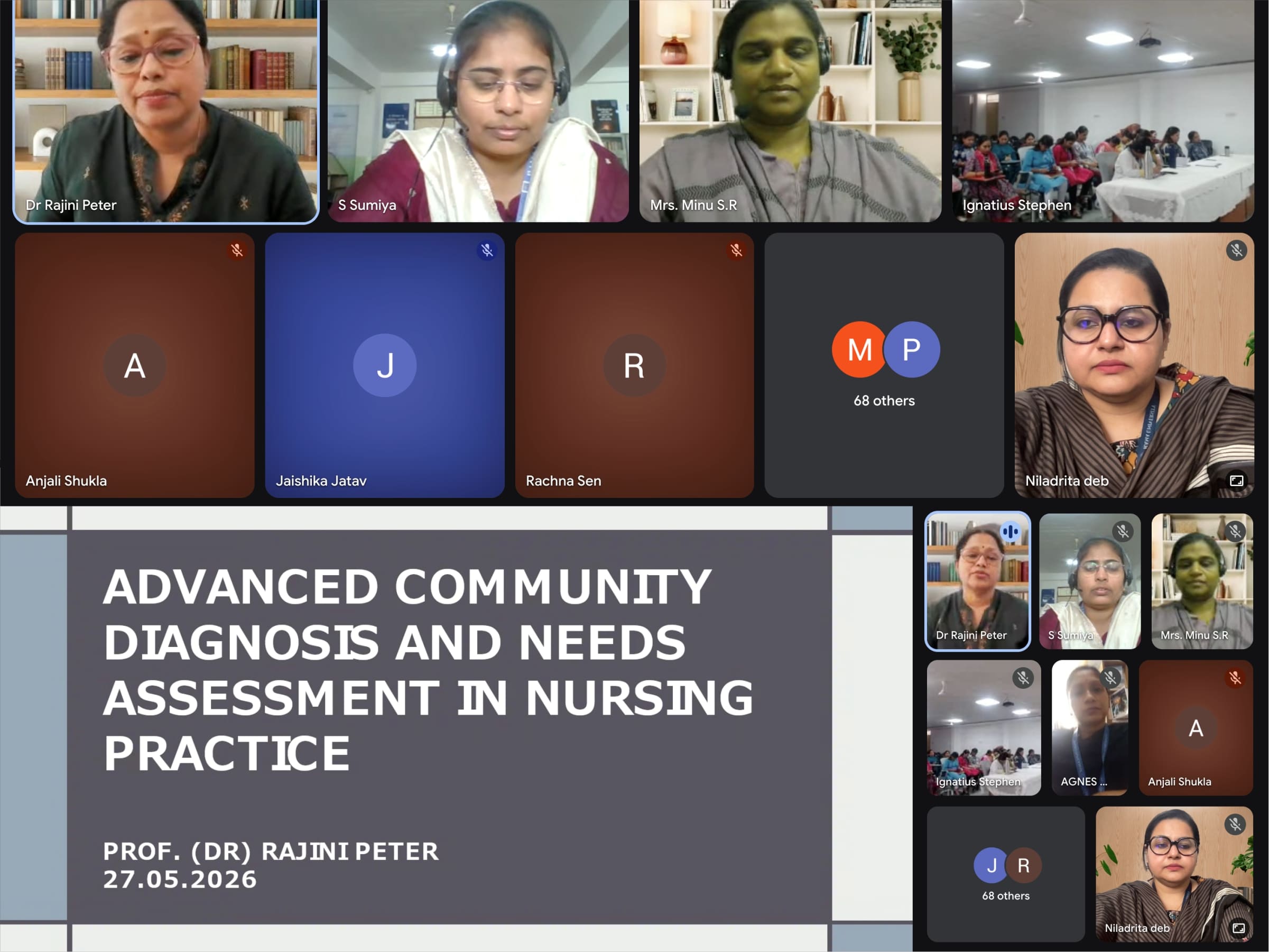
The programme commenced at 10:20 am with a brief introduction of the resource person by Mrs. Niladrita Deb, Associate Professor, Department of Medical Surgical Nursing, Rama College of Nursing, Rama University. She warmly welcomed the participants and emphasized the importance of community-based nursing education in preparing competent nursing professionals capable of addressing the changing healthcare needs of society.
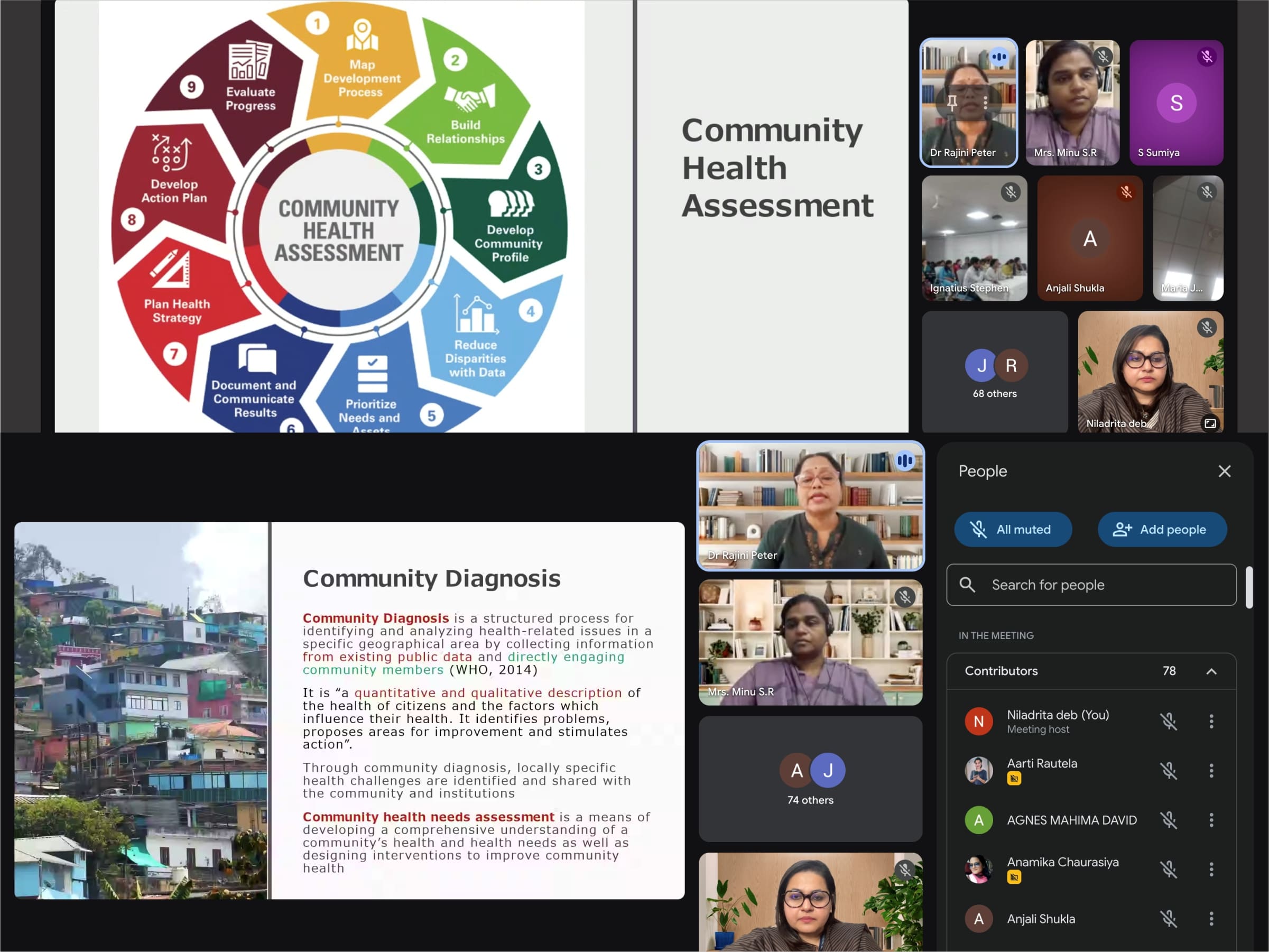
The keynote session was delivered by Dr. Rajini Peter, Professor cum Principal, College of Nursing, AIIMS, Nagpur on the topic “Advanced Community Diagnosis and Needs Assessment in Nursing Practice.” The speaker emphasized the significance of systematic community assessment in identifying health needs, planning appropriate interventions, and improving community health outcomes. She discussed various community diagnosis methods, epidemiological approaches, data collection techniques, family and community assessment tools, and prioritization of healthcare problems.
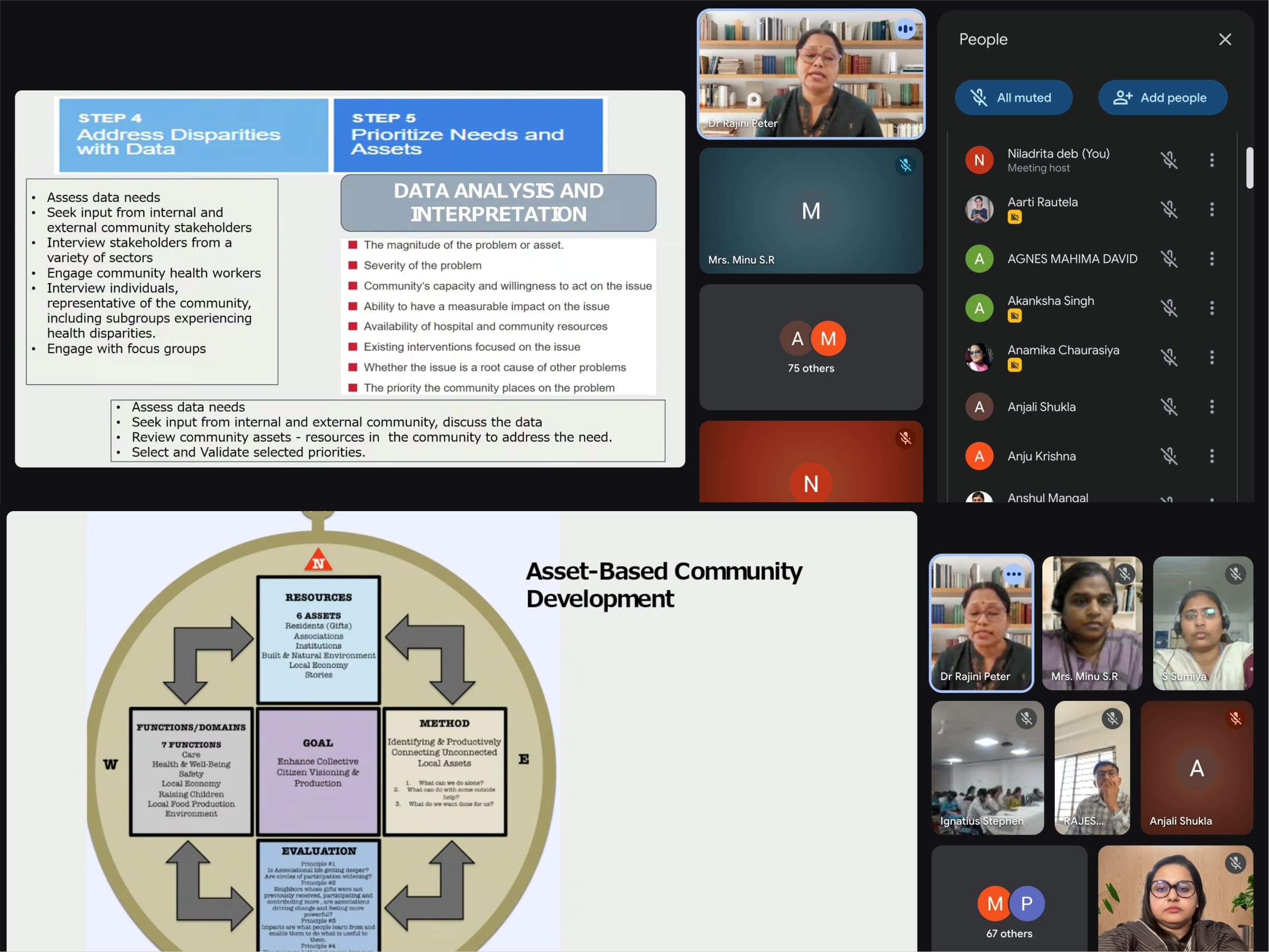
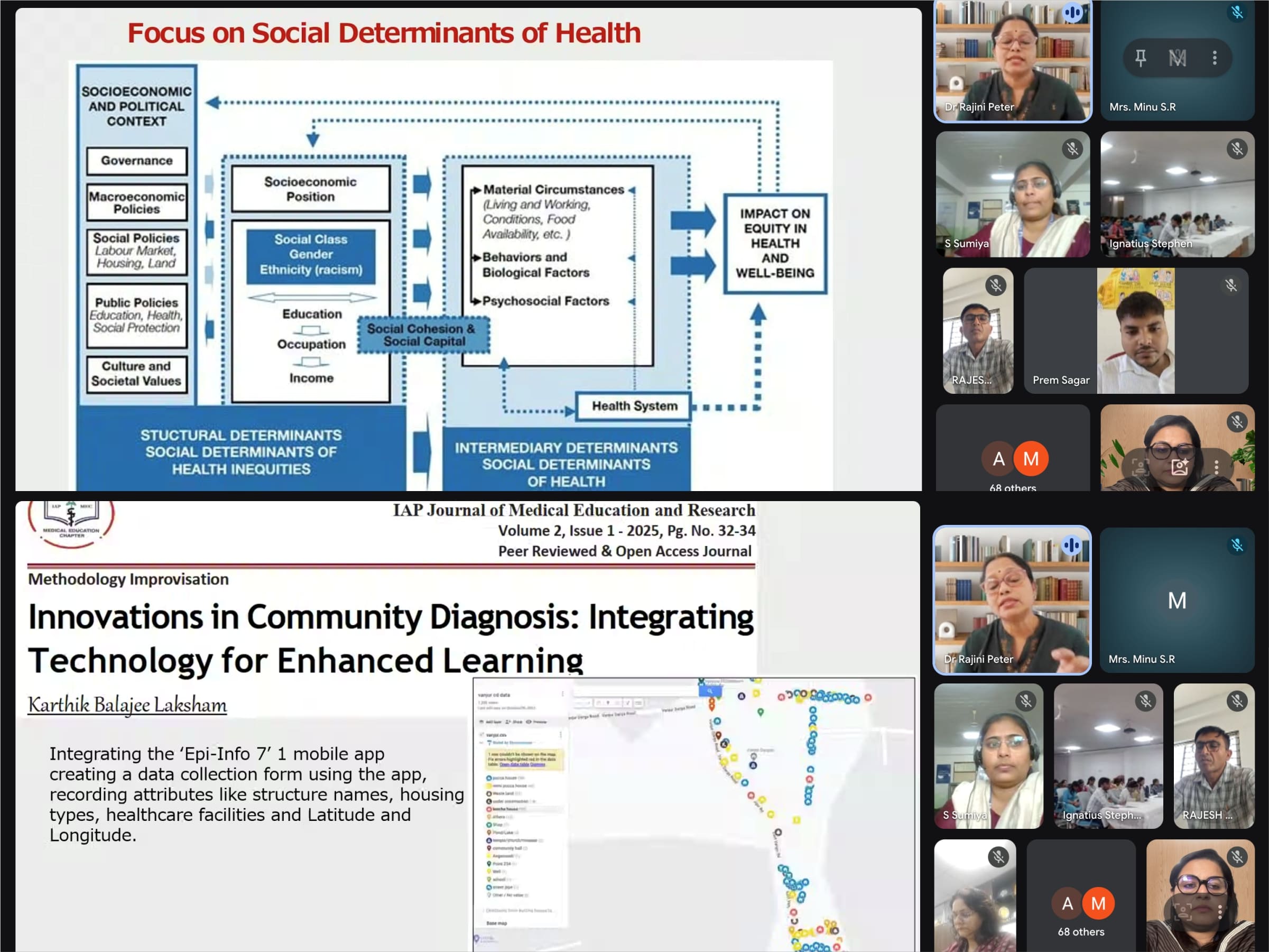
Dr. Rajini Peter also elaborated on several important contemporary concepts in community health nursing including Asset-Based Community Development (ABCD), which focuses on identifying and utilizing community strengths and available resources for sustainable health improvement. She highlighted the importance of addressing social determinants of health and explained how factors such as education, income, housing, environment, and social support influence community health outcomes.
The resource person further discussed the growing role of digital health mapping and Geographic Information System (GIS) technologies in community diagnosis and healthcare planning. She introduced participants to the use of the Epi Info 7 mobile application for epidemiological data collection, analysis, and disease surveillance, emphasizing its practical utility in field-based community health assessments and research activities.
The session also covered Community-Based Participatory Research (CBPR), emphasizing active involvement of community members in identifying health priorities and planning interventions. The speaker explained the significance of building strong relationships with stakeholders and highlighted the principles of effective community participation and collaboration. In addition, she discussed the importance of multisectoral collaboration in community health, involving healthcare professionals, educational institutions, local governance bodies, NGOs, and community leaders for comprehensive healthcare delivery and sustainable development.
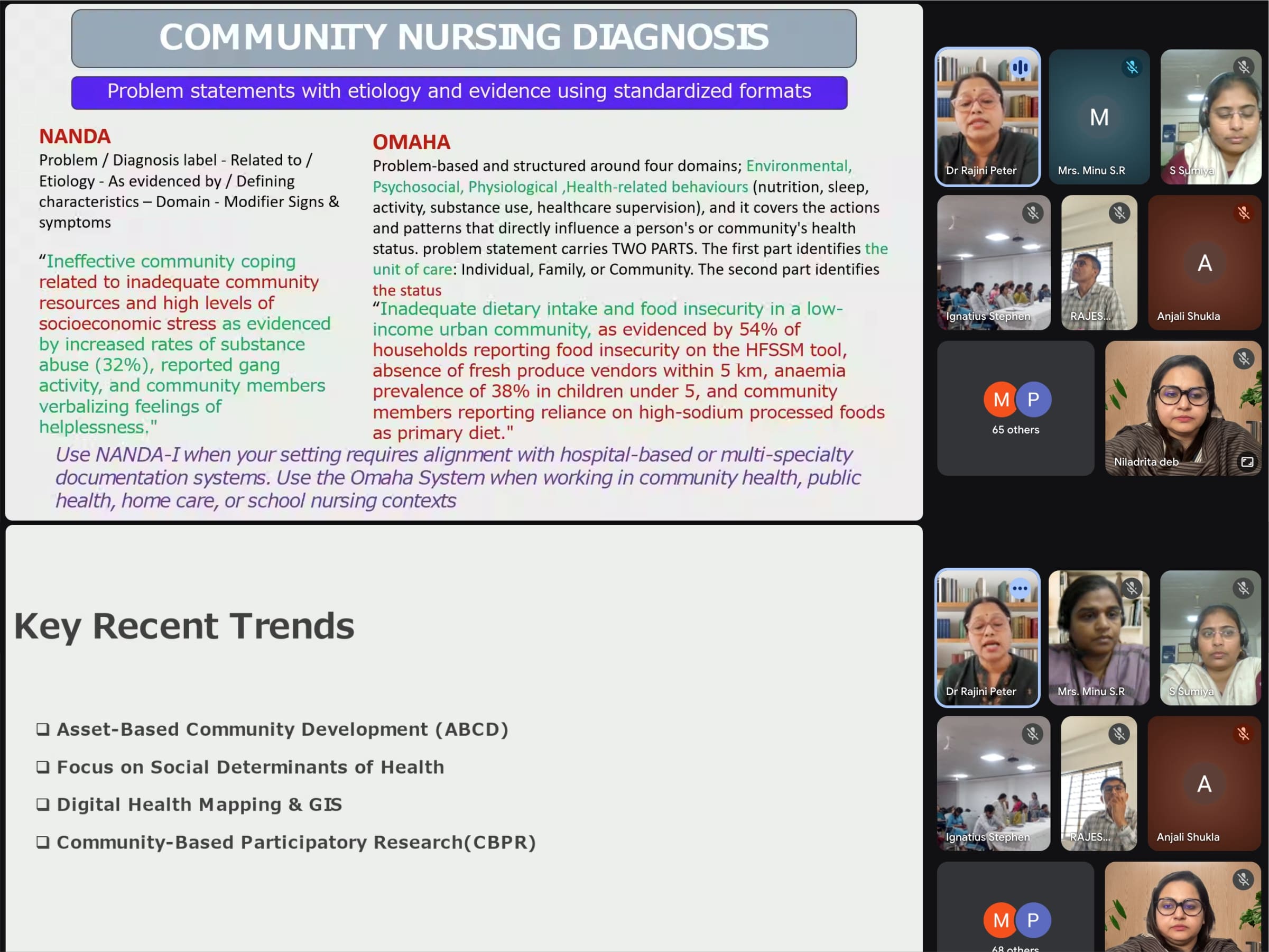
Special emphasis was given to evidence-based community nursing practices, health indicators, participatory rural appraisal methods, and the role of nurse educators in preparing students for effective community-based healthcare delivery. The resource person also discussed the application of OMAHA and NANDA nursing diagnosis in community health nursing practice for systematic assessment, nursing care planning, intervention, and evaluation of community health problems. She highlighted the importance of accurate needs assessment in planning preventive, promotive, curative, and rehabilitative healthcare services at the community level. Real-life examples and practical applications shared during the session helped participants gain deeper understanding of comprehensive community health assessment and planning.
The session was highly interactive and informative. Participants actively engaged in discussions, shared experiences, and clarified their queries with the resource person. The programme significantly contributed to enhancing the knowledge and teaching competencies of nursing educators in the areas of community health nursing, community diagnosis, digital health technologies, participatory research, and innovative nursing educational practices.
The day concluded with a formal vote of thanks and summary of the session at 12:30 pm. Dr. Jasmi Johnson, Principal Dean, Faculty of Nursing, Rama University, expressed sincere gratitude to the distinguished speaker, faculty members, participants, and coordinators for their active involvement and valuable contributions toward the successful conduct of Day 3 of the Faculty Development Programme. She also emphasized the importance of community health services and the vital role of nurses in strengthening community-based healthcare delivery, promoting preventive healthcare practices, and improving the overall health and well-being of society through dedicated service and compassionate care.