News
Faculty of Agricultural Sciences Organizes RAWE Orientation Programme for Final-Year B.Sc. (Hons.) Agriculture Students Successfully
11 Jul 2026
Preparing B.Sc. (Hons.) Agriculture Students for Experiential Learning, Rural Engagement, and Professional Field Training on 10 July 2026.
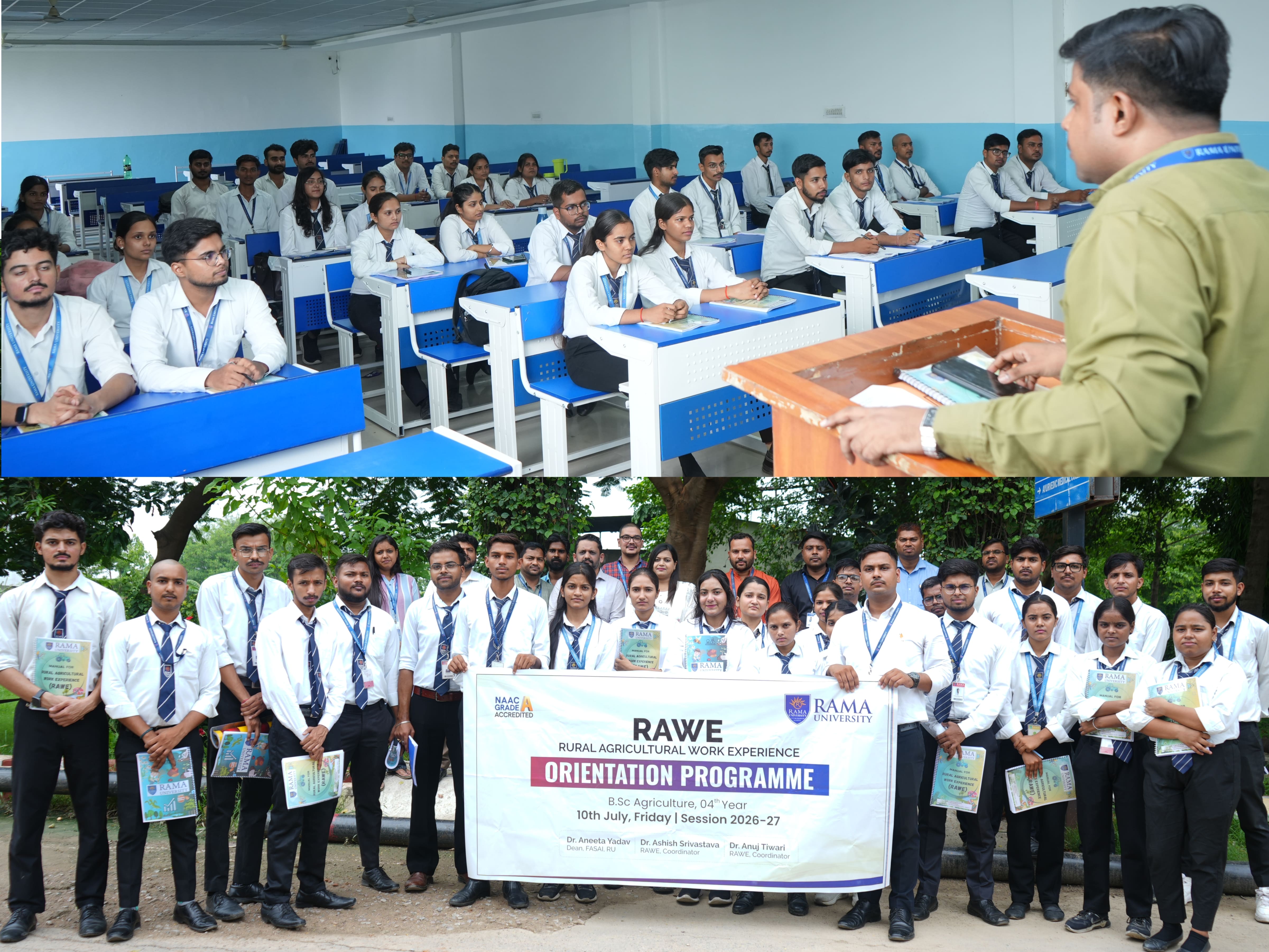
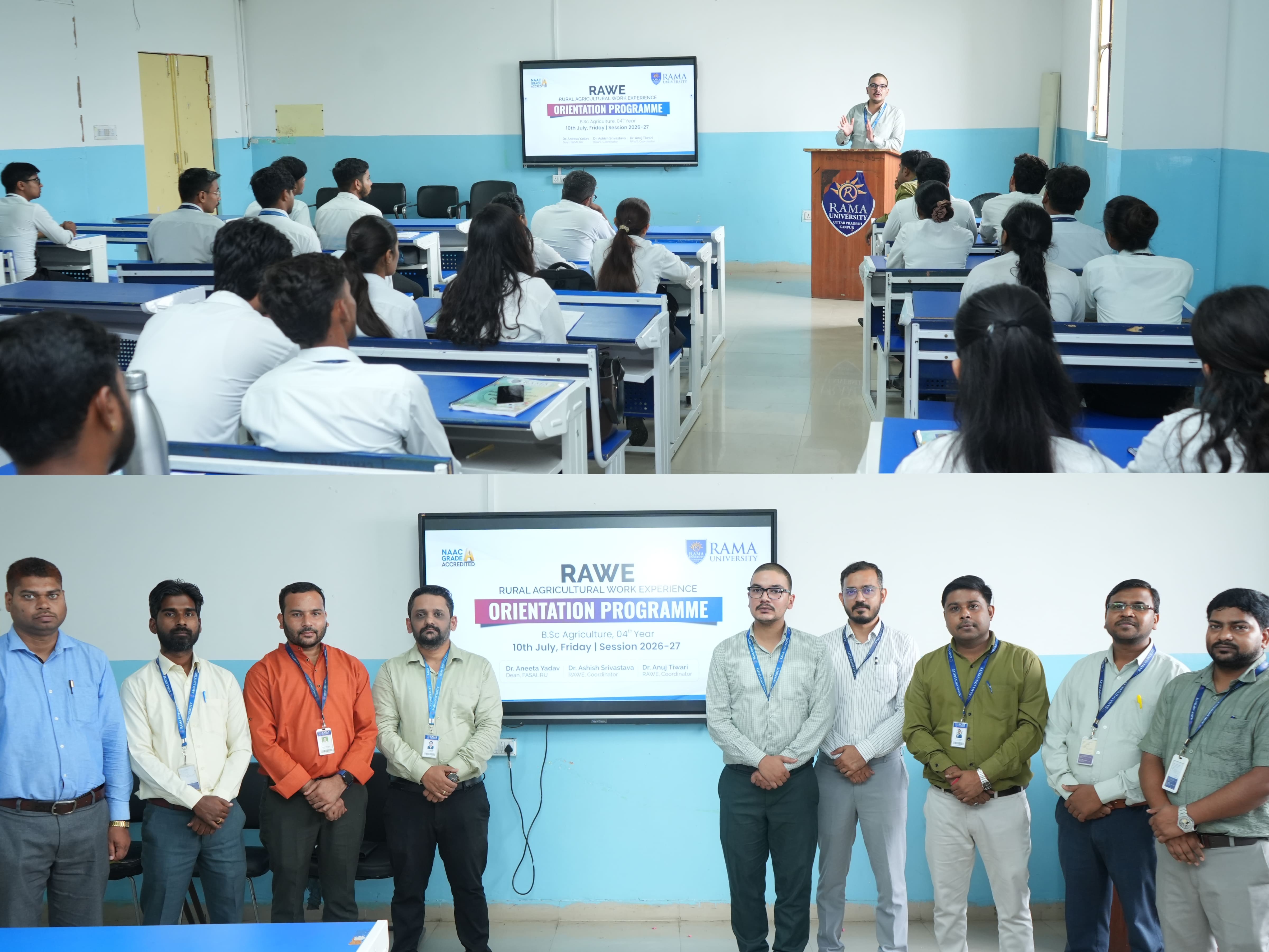
The Faculty of Agricultural Sciences & Allied Industries, Rama University, Mandhana, Kanpur, organized the RAWE Orientation Programme on 10 July 2026 for the final-year B.Sc. (Hons.) Agriculture students. The programme commenced with a welcome address by Dr. Aneeta Yadav, Dean, FASAI, who highlighted the significance of experiential learning in developing competent agricultural professionals. She encouraged students to utilize the RAWE programme as an opportunity to understand rural livelihoods, strengthen farmer interactions, and translate classroom knowledge into practical field applications.
A comprehensive orientation session was conducted to explain the objectives, operational framework, and implementation schedule of the RAWE programme in accordance with ICAR guidelines. Students were introduced to the various experiential learning components, including Village Attachment, Crop Production Programme (CPP), Diagnostic Surveys, Agro-Industrial Attachment, and NGO/Institutional Training. Detailed guidance was provided regarding field assignments, maintenance of records, preparation of reports, data collection techniques, and professional conduct during village stay.
The programme also featured interactive sessions with experts from Krishi Vigyan Kendras (KVKs), Agricultural Extension professionals, and alumni who had successfully completed RAWE. They shared valuable insights from their field experiences, discussed practical challenges encountered during village attachment, and provided useful suggestions for effective communication with farmers, problem identification, and documentation of field observations.
The RAWE Orientation Programme laid a strong foundation for the successful implementation of the experiential learning component of the B.Sc. (Hons.) Agriculture curriculum. By preparing students for direct engagement with rural communities, the programme reflected the vision of ICAR in nurturing skilled, socially responsible, and industry-ready agricultural graduates. The orientation concluded on a positive note with active student participation and enthusiasm, making the programme both informative and highly successful.