News
Faculty of Nursing Organizes Two-Day Workshop on Lactation Management: Enhancing Breastfeeding Skills and Maternal Support
29 Aug 2026
- Event: Workshop on Lactation Management
- Theme: Lactation Management
- Event Activity: Interactive Sessions & Demonstrations on Let-Down Reflex, Correct Positioning, Breastfeeding Techniques and Breast Care
- Date: 25.08.2026 – 26.08.2026
- Time: 10:00 AM – 4:00 PM
- Venue: Seminar Hall, Faculty of Nursing, Rama University
- Organized By: Department of Obstetrical and Gynaecological Nursing, Faculty of Nursing, Rama University, Kanpur, Uttar Pradesh
1. Introduction
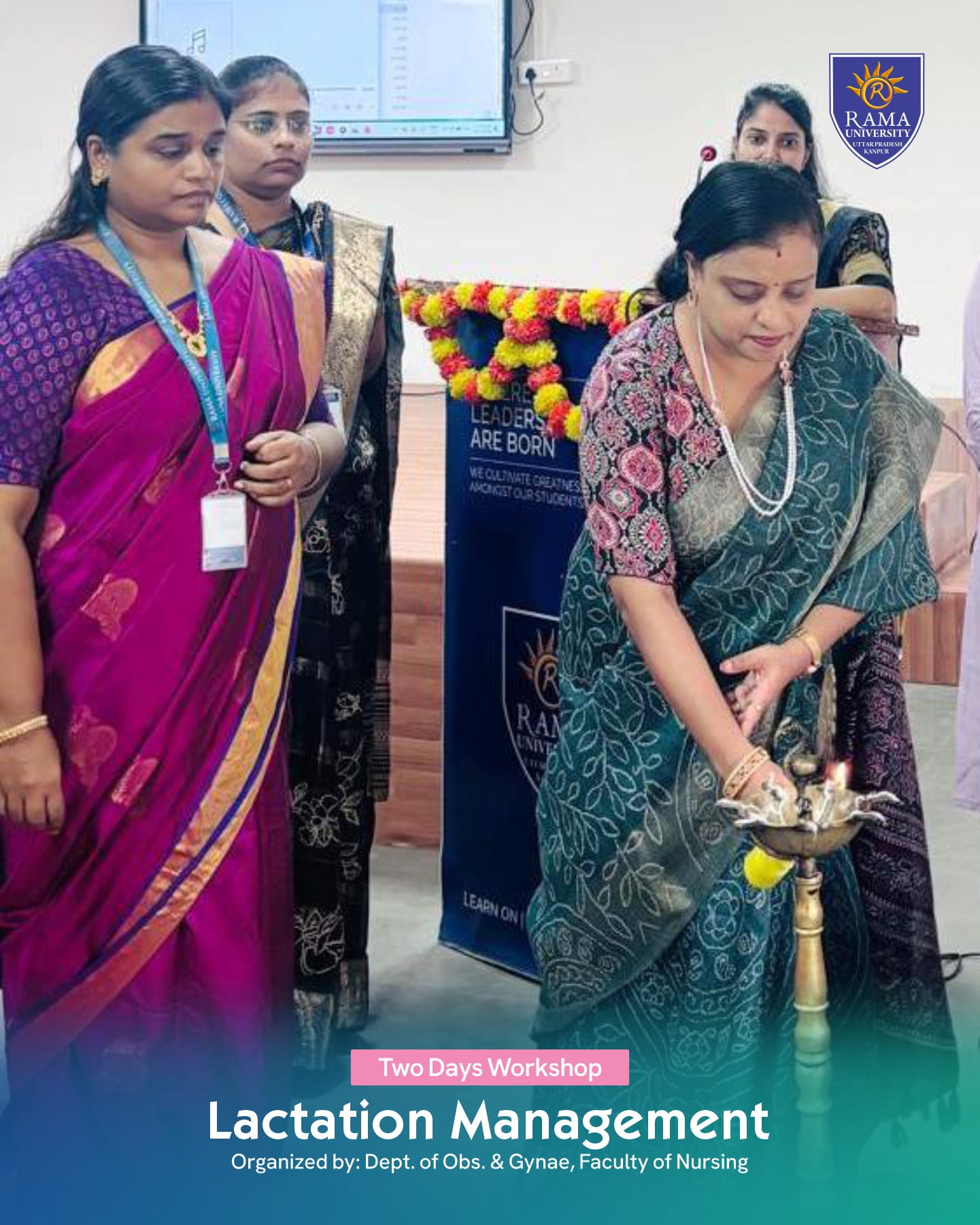
The Faculty of Nursing, Rama University, successfully organized a Two-Day Workshop on Lactation Management on 25th and 26th August 2026 under the Department of Obstetrical and Gynaecological Nursing. The workshop aimed to enhance the knowledge, clinical skills, confidence, and professional competence of nursing students in breastfeeding, lactation management, breast care, maternal counselling, and the management of common lactation-related problems.
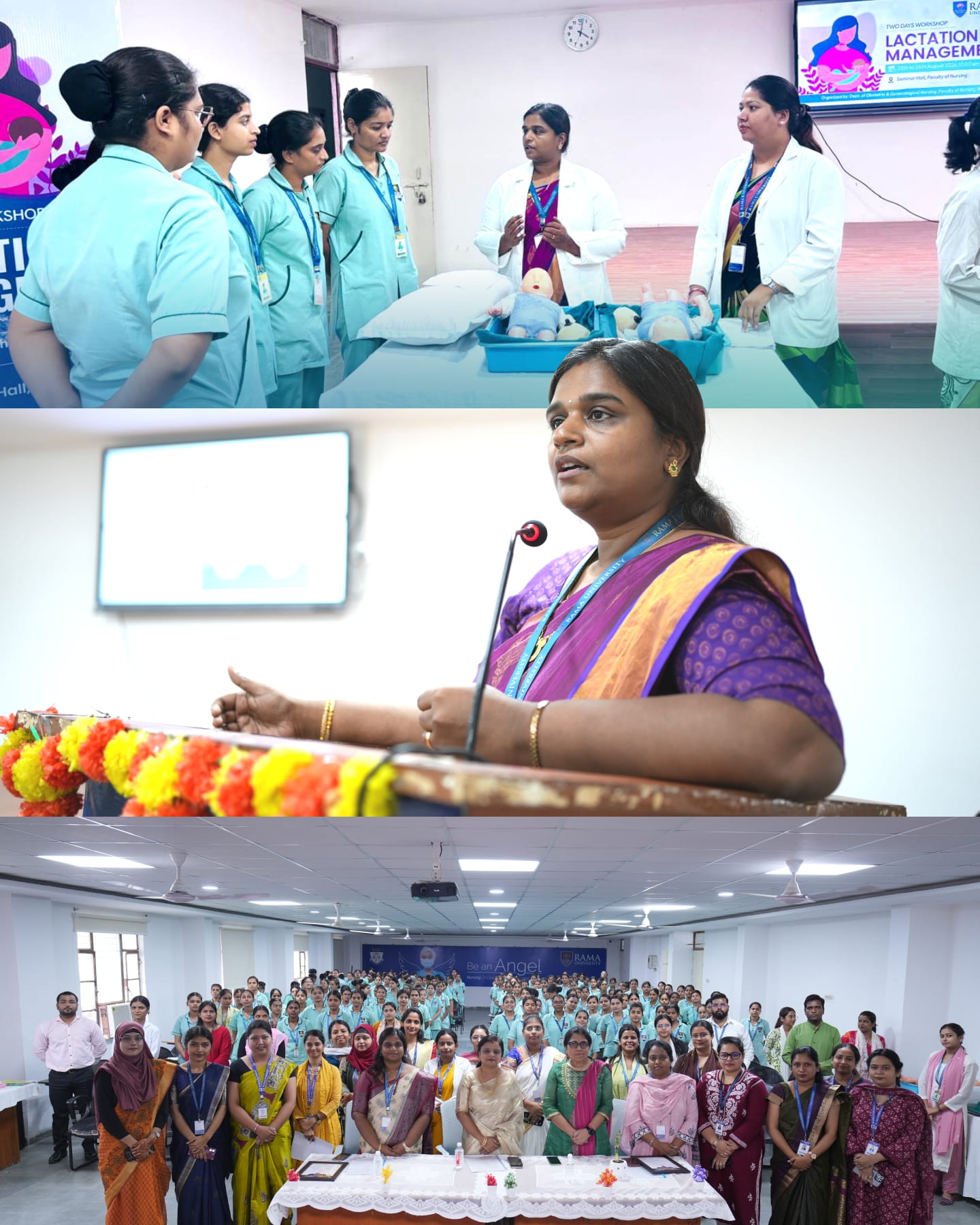
Approximately 200 students from ANM 2nd Year, GNM 3rd Year, B.Sc. Nursing 7th Semester, and M.Sc. Nursing (OBG) actively participated in the workshop.
2. Objectives of the Workshop
The workshop was organized with the following objectives:
- To strengthen students’ understanding of the physiology of lactation and milk production.
- To develop competency in correct breastfeeding positioning, attachment, and latching techniques.
- To provide hands-on experience in breastfeeding-related skills.
- To enhance knowledge regarding breast care and prevention of common lactation problems.
- To develop effective maternal counselling and communication skills.
- To familiarize students with the identification, prevention, and management of common breastfeeding difficulties.
- To reinforce the professional role of nurses in promoting successful breastfeeding and maternal-newborn health.
3. Guidance and Leadership
The programme was organized under the guidance of Prof. Dr. Jasmi Johnson, Dean-cum-Principal, and Dr. Minu S.R., Vice Principal, Faculty of Nursing, Rama University.
Their guidance and support contributed significantly to the successful planning and execution of the workshop.
4. Day One – Academic Sessions and Practical Demonstrations
On the first day, Dr. Jasmi Johnson delivered an informative session on lactation physiology, factors influencing milk production, and the initiation and establishment of breastfeeding. The session helped students understand the physiological basis of breastfeeding and the factors that influence successful lactation.
Dr. Minu S.R. conducted a session on correct breastfeeding positions, positioning and attachment, latching techniques, and effective feeding practices. Students were guided on how appropriate positioning and attachment can contribute to effective breastfeeding and maternal comfort.
Mrs. Agnes Mahima David, Associate Professor, Department of Obstetrical and Gynaecological Nursing, addressed the role of nurses in breastfeeding promotion, maternal education, counselling, emotional support, and identification of breastfeeding difficulties.
5. Station-Wise Demonstration and Re-Demonstration
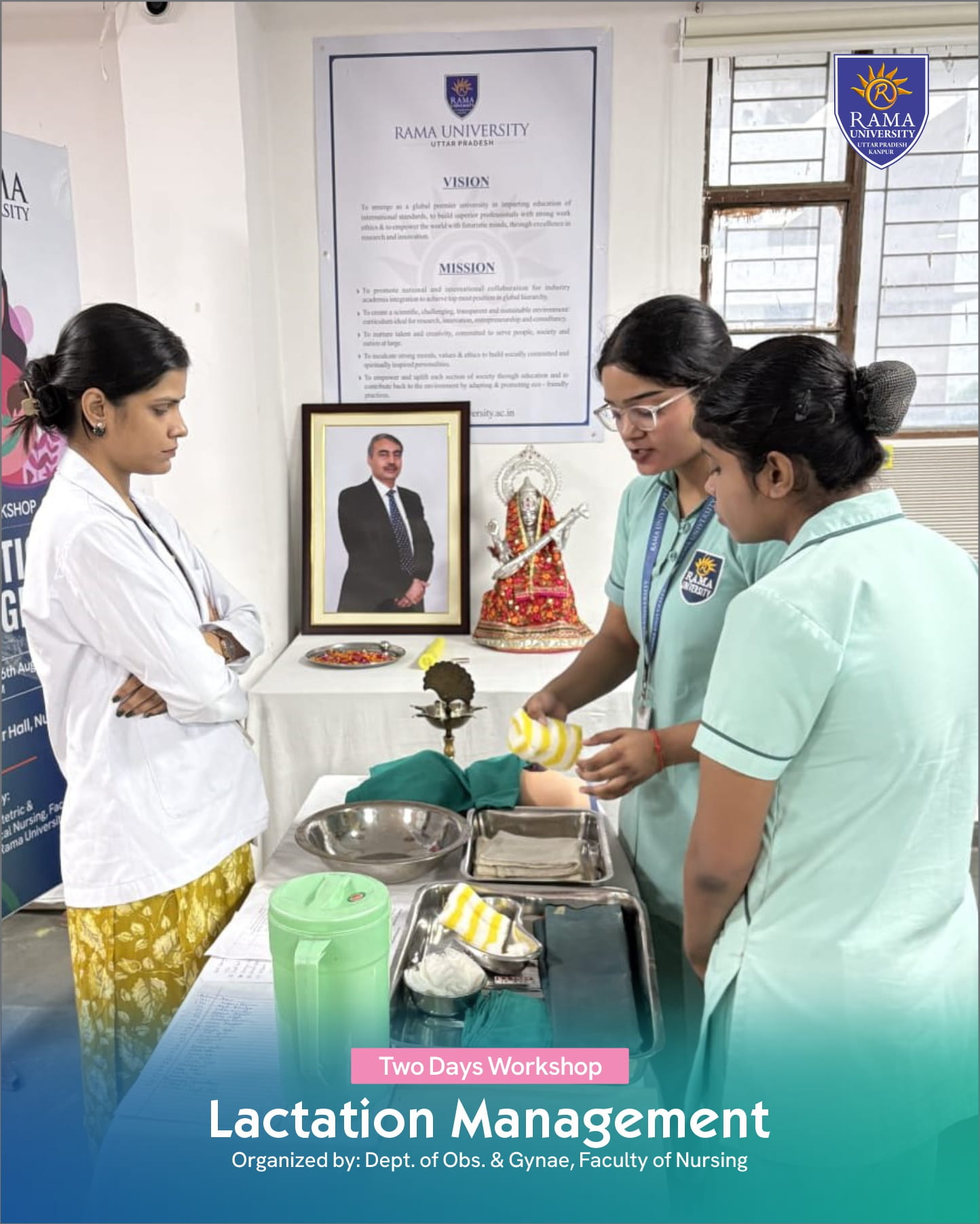
A major component of the workshop was the station-wise practical demonstration and re-demonstration. Students were divided into groups and rotated through three practical learning stations.
Station 1 – Breastfeeding Positions
Students were introduced to appropriate maternal and infant positions for breastfeeding. Correct positioning techniques were demonstrated and subsequently re-demonstrated by the students under faculty supervision.
Station 2 – Let-Down Reflex, Latching and Attachment Technique
Students learned about the let-down reflex and practiced correct latching and attachment techniques. Faculty members provided immediate guidance and corrected students’ techniques wherever required.
Station 3 – Care of the Breast
This station focused on breast hygiene, breast care, prevention of common breastfeeding-related problems, and appropriate nursing measures. Students gained practical understanding of how nurses can support mothers in maintaining healthy breastfeeding practices.
The station-wise approach provided an interactive learning environment and enabled students to develop practical skills through supervised practice.
6. Day Two – Expert Clinical Session
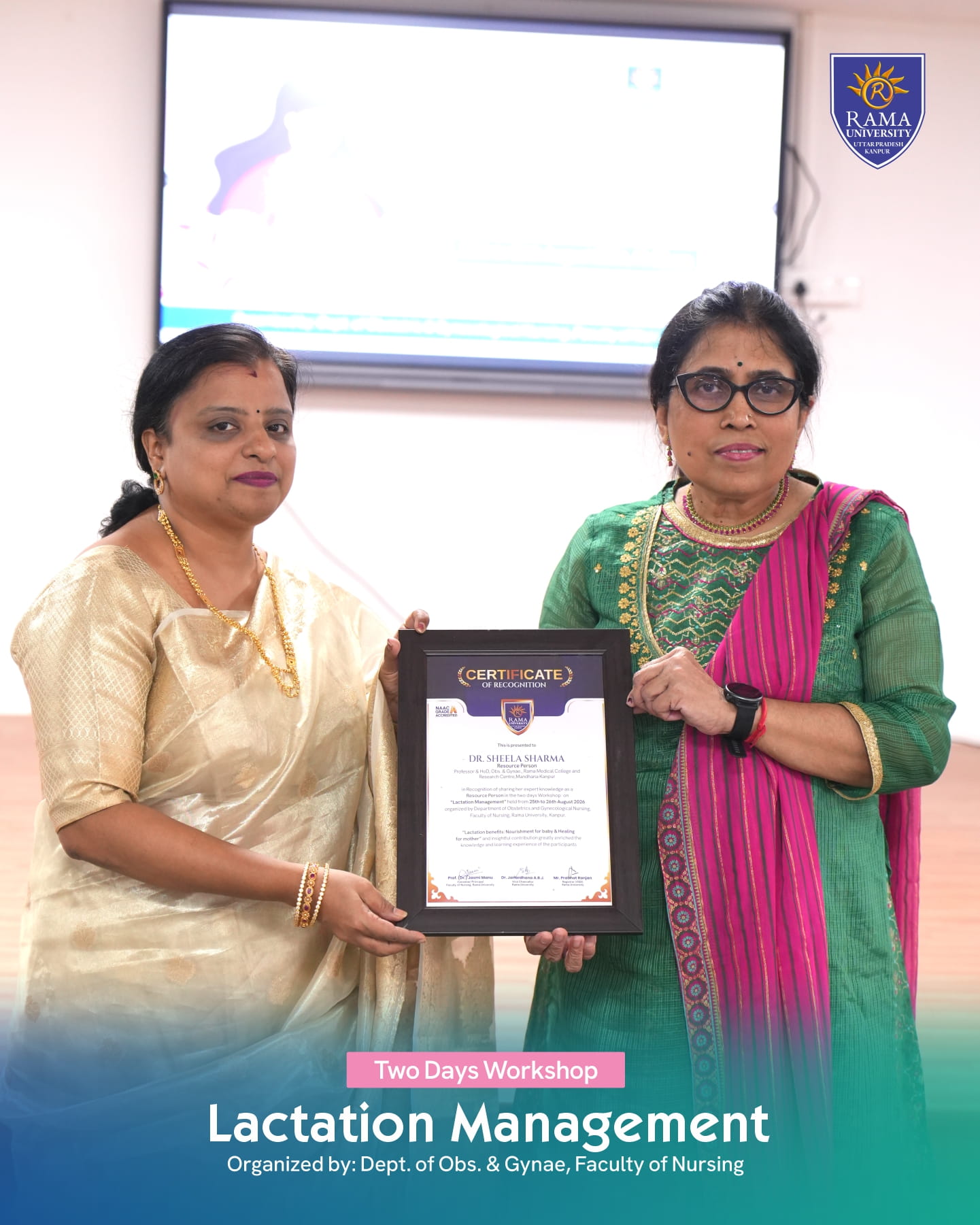
On the second day, Dr. Sheela Sharma, HOD, Department of Obstetrics and Gynaecology, Rama Medical College, Kanpur, delivered an expert session on breast assessment, breast care, common lactation-related complications, their prevention and management, appropriate breastfeeding practices, and timely referral.
The expert session provided students with valuable clinical insights and strengthened their ability to recognize common breastfeeding concerns and understand appropriate nursing interventions and referral practices.
7. Teaching and Learning Methodology
The workshop followed an interactive and experiential learning approach. Various teaching-learning methods were used, including:
- Interactive lectures
- Demonstrations
- Re-demonstrations
- Group discussions
- Question-and-answer sessions
- Practical activities
- Supervised skill practice
- Station-wise learning
This methodology helped bridge the gap between theoretical knowledge and practical clinical application.
8. Skills and Competencies Developed
The workshop strengthened students’ competencies in:
- Breastfeeding positioning and attachment
- Correct latching techniques
- Understanding of the let-down reflex
- Breast care and hygiene
- Identification of common breastfeeding difficulties
- Prevention and management of common lactation-related problems
- Maternal education and counselling
- Emotional support for breastfeeding mothers
- Effective communication with mothers and families
- Evidence-based and respectful breastfeeding support
9. Role of Nurses in Lactation Management
The workshop reinforced the vital role of nurses in supporting mothers throughout the breastfeeding journey. Students gained a better understanding of the importance of providing individualized, evidence-based, respectful, and family-centred breastfeeding support.
The programme also emphasized that nurses play an important role in educating mothers, identifying breastfeeding difficulties at an early stage, providing appropriate support, and facilitating timely referral whenever specialized care is required.
10. Participation and Feedback
Approximately 200 nursing students actively participated in the two-day workshop. The participants demonstrated enthusiasm and active involvement during the lectures, demonstrations, practical sessions, discussions, and re-demonstrations.
Feedback was collected from the participants. The students expressed positive responses regarding the content of the workshop, practical demonstrations, resource persons, learning methodology, and overall organization of the programme.
11. Anchoring and Organizing Team
The programme was effectively anchored by Ms. Rachna Sen and Ms. Anjali Shukla, with the active support and cooperation of the faculty members and organizing team.
Their coordinated efforts contributed to the smooth and effective conduct of the workshop.
12. Conclusion
The Two-Day Workshop on Lactation Management successfully enhanced the knowledge, practical skills, confidence, communication abilities, and professional competence of nursing students.
Through expert sessions, demonstrations, re-demonstrations, discussions, and supervised practical activities, the workshop provided students with meaningful opportunities to strengthen their breastfeeding and lactation management skills.
The programme reinforced the essential role of nurses in promoting successful breastfeeding, supporting mothers and families, preventing breastfeeding-related complications, and contributing to improved maternal and newborn health outcomes.
The programme concluded with a Vote of Thanks delivered by Ms. Rashmi Singh, Department of Obstetrical and Gynaecological Nursing, expressing gratitude to the management, resource persons, faculty members, organizing team, and participating students for their valuable contribution to the successful completion of the workshop.
Overall Outcome
The workshop was successfully conducted and achieved its intended objectives by providing nursing students with comprehensive theoretical knowledge, practical exposure, and clinical confidence in lactation management and breastfeeding support.