News
Five-Day Faculty Development Program on Cyber Security, Digital Responsibility, AI, Ethics and Safe Digital Practices
12 Oct 2026
Five-Day Faculty Development Program (FDP)
Cyber Security & Digital Responsibility
Awareness, Law, Ethics, AI and Safe Digital Practices
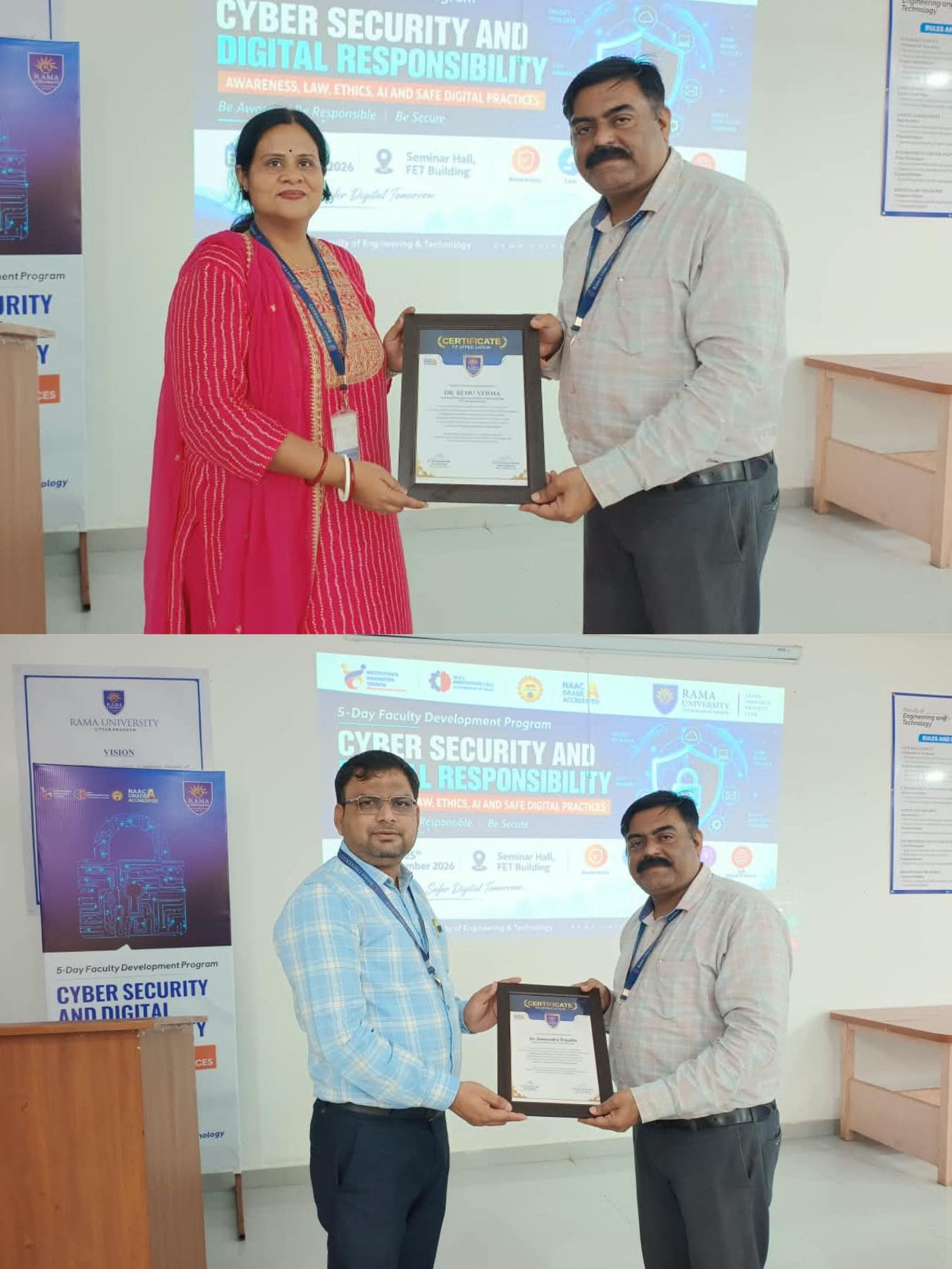
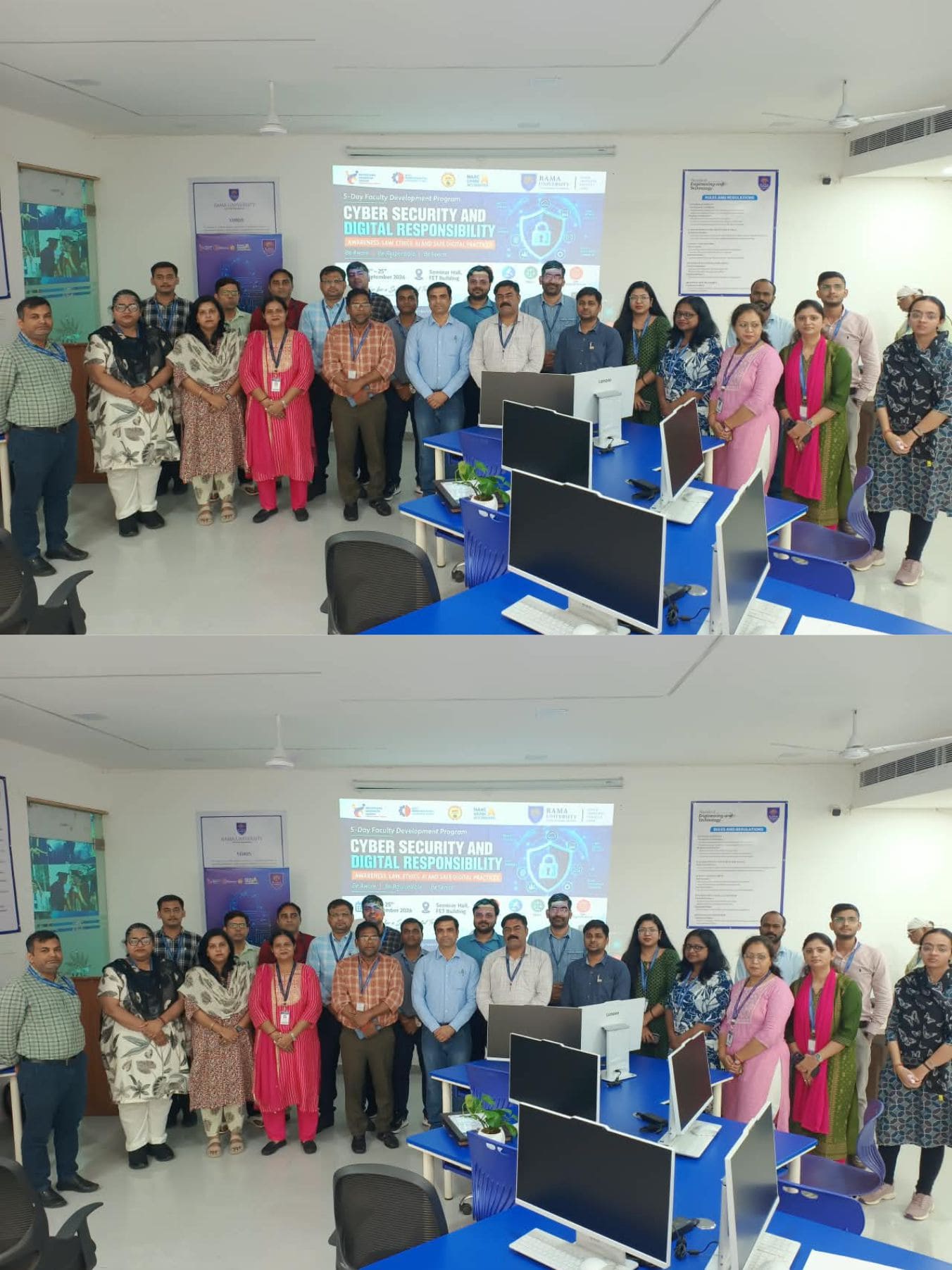
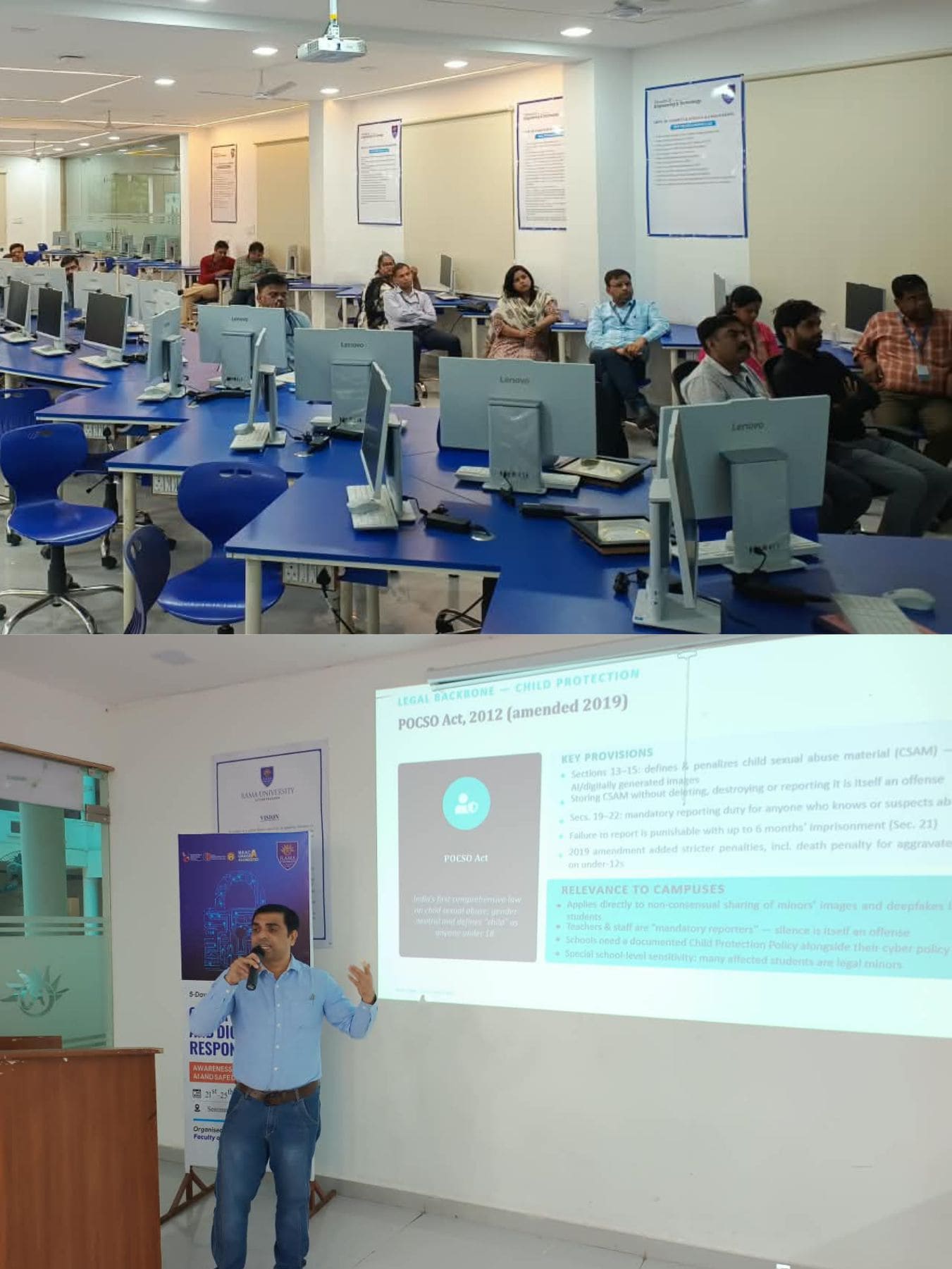
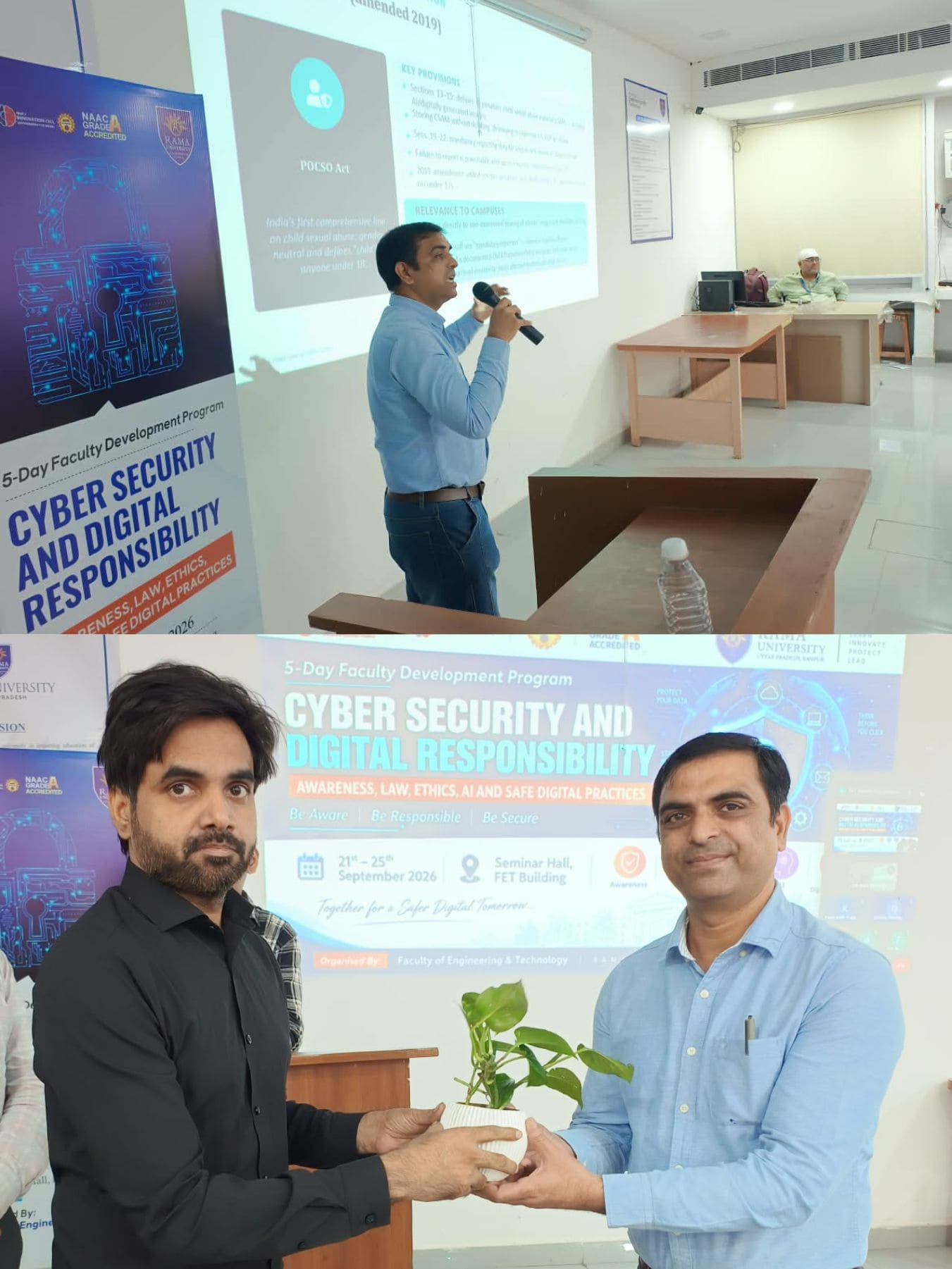
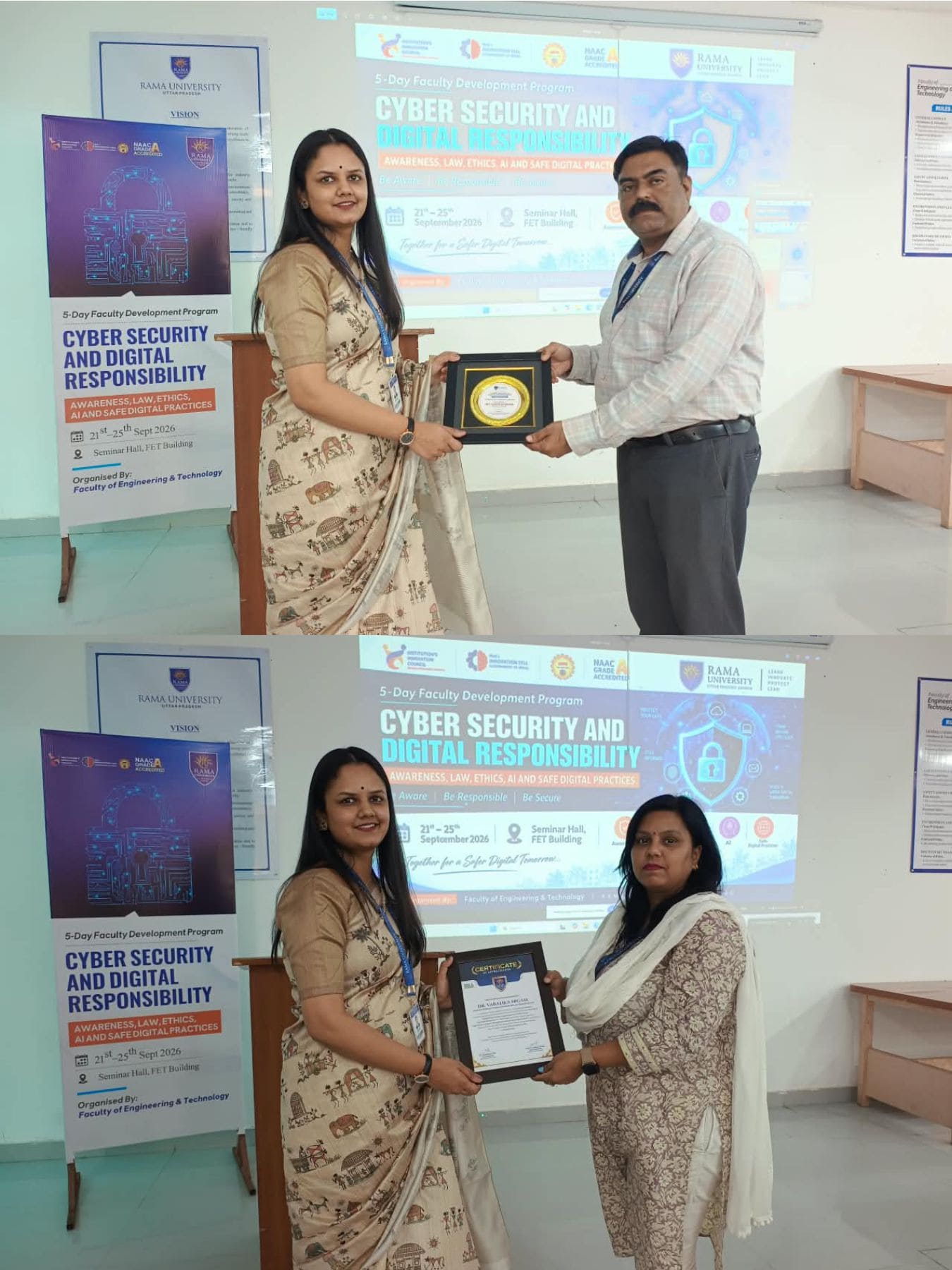
The Faculty of Engineering & Technology (FET), Rama University, Kanpur, organized a five-day Faculty Development Program (FDP) titled “Cyber Security & Digital Responsibility: Awareness, Law, Ethics, AI and Safe Digital Practices” from 21 to 25 September 2026 at the FET Seminar Hall. The programme aimed to strengthen awareness of emerging cyber threats, digital ethics, privacy, cyber law, Artificial Intelligence-related risks, and safe digital practices among academic and professional participants.
Programme Details
Date: 21–25 September 2026
Venue: FET Seminar Hall, Rama University, Kanpur
Organizing Institution: Faculty of Engineering & Technology (FET), Rama University, Kanpur
Participants: Faculty members and academicians, research scholars and researchers, undergraduate and postgraduate students, IT and cybersecurity professionals, industry experts, academic administrators, and innovation and entrepreneurship professionals
Need and Purpose of the Programme
With the rapid growth of digital technologies, Artificial Intelligence, social media, online banking, cloud services, and connected devices, cybersecurity and privacy risks have become increasingly important. The FDP focused on practical awareness of phishing, identity theft, data leakage, social engineering, deepfakes, AI-enabled scams, digital footprints, privacy exploitation, and responsible technology use. It also highlighted the role of faculty members and professionals in promoting a secure and responsible digital culture within academic institutions.
Objectives
- To create awareness about cyber threats, digital frauds, and emerging security challenges.
- To develop understanding of data privacy, digital footprints, and online tracking.
- To explain phishing, credential theft, and social engineering attacks.
- To build awareness of cyber laws, digital ethics, and responsible technology use.
- To understand the risks associated with deepfakes, AI-based scams, and AI-enabled cybercrime.
- To demonstrate practical approaches to identifying data leakage and privacy exploitation.
- To promote safe digital practices in personal, academic, and professional environments.
- To encourage a cyber-aware and digitally responsible campus culture.
Five-Day Session Themes
|
Day
|
Session Theme
|
|
Day 1
|
Think Before You Click: Cyber Safety in Everyday Life
|
|
Day 2
|
Digital Ethics & Rights: Navigating the Responsible Digital World
|
|
Day 3
|
Your Digital Footprint under Attack: Tracking, Data Leakage & Privacy Exploitation
|
|
Day 4
|
How Hackers Steal Your Digital Privacy: Phishing, Credential Theft & Social Engineering
|
|
Day 5
|
From Cyber Law to Cyber Safety: Building a Secure Campus
|
Resource Persons
The programme featured the following resource persons, whose areas of expertise covered cybersecurity, Artificial Intelligence, data protection, privacy, and cyber law:
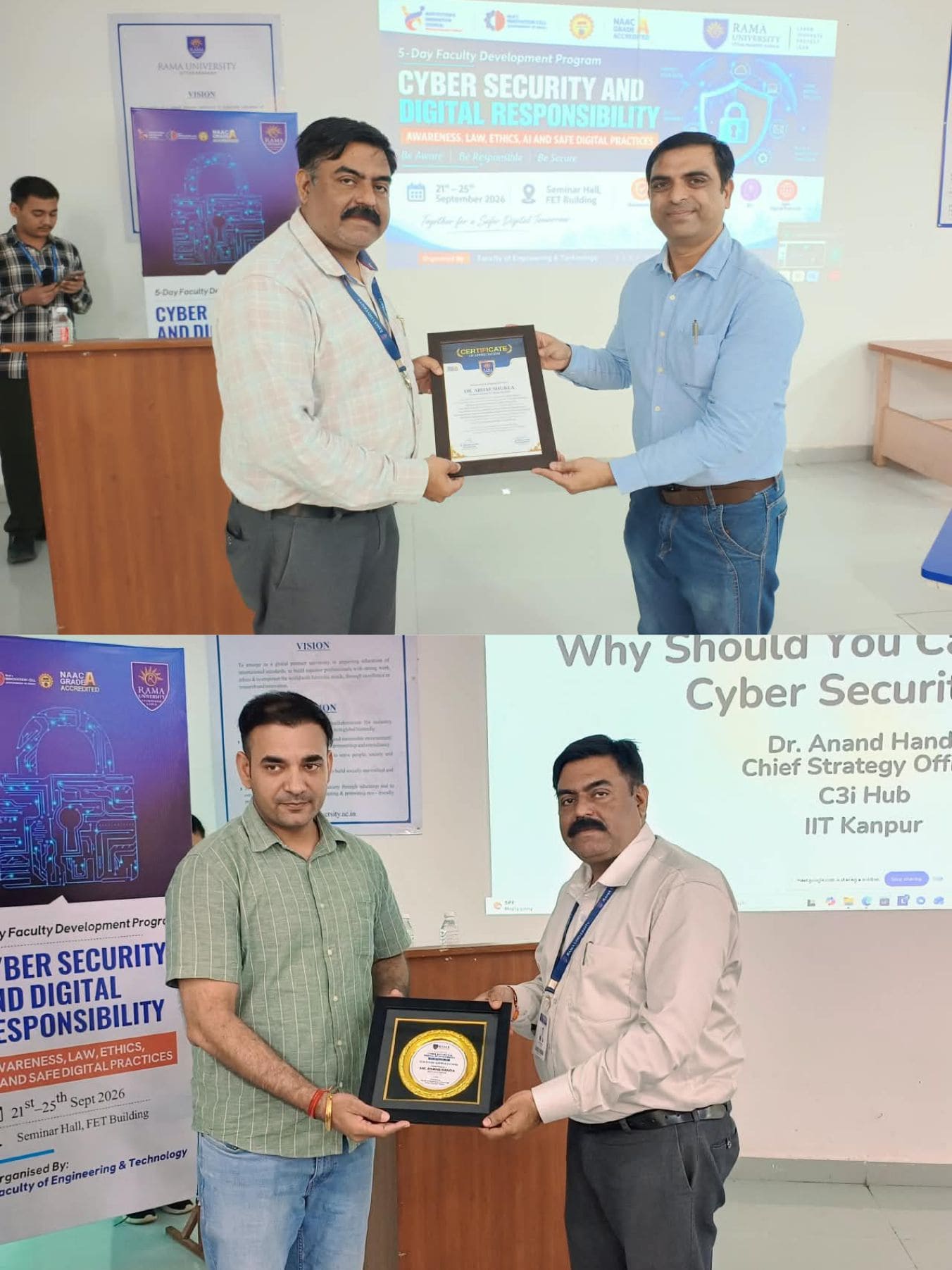
- Anand Handa, Chief Strategy Officer (CSO), C3iHub, IIT Kanpur, with expertise in OT/ICS cybersecurity, malware analysis, memory forensics, threat intelligence, intrusion detection and response, adversarial machine learning, and AI-driven threat defence.
- (Dr.) Abhay Shukla, Professor and Dean, Faculty of Engineering & Technology, Rama University, Kanpur, with expertise in Artificial Intelligence, Machine Learning, Data Science, Cyber Security, and Responsible AI.
- Ashok Kumar, Academician, Atal Bihari Vajpayee School of Legal Studies, Chhatrapati Shahu Ji Maharaj University, Kanpur, with research and teaching interests in data protection, privacy, cyber law, and legal research methodology.
Key Learning Outcomes
The programme was designed to help participants recognize common cyber threats and unsafe digital practices; understand digital responsibility, ethics, privacy, and data protection; identify warning signs of phishing, social engineering, and credential theft; understand how digital footprints and permissions can expose personal information; build awareness of deepfakes, AI scams, and emerging cybercrime; and promote practical cyber-safety habits across the campus.
Expected Impact and Institutional Relevance
The FDP supported faculty development, digital competency, responsible use of emerging technologies, and the development of a safer technology-enabled academic environment. Its focus on professional and ethical responsibility and digital competency was aligned with institutional quality priorities and relevant Sustainable Development Goals, including SDG 4, SDG 9, SDG 16, and SDG 17.