News
One-Day Workshop Explores Next-Gen AI, Causal NLP, and Text-Based Reinforcement Learning for Intelligent Problem Solving
04 Oct 2026
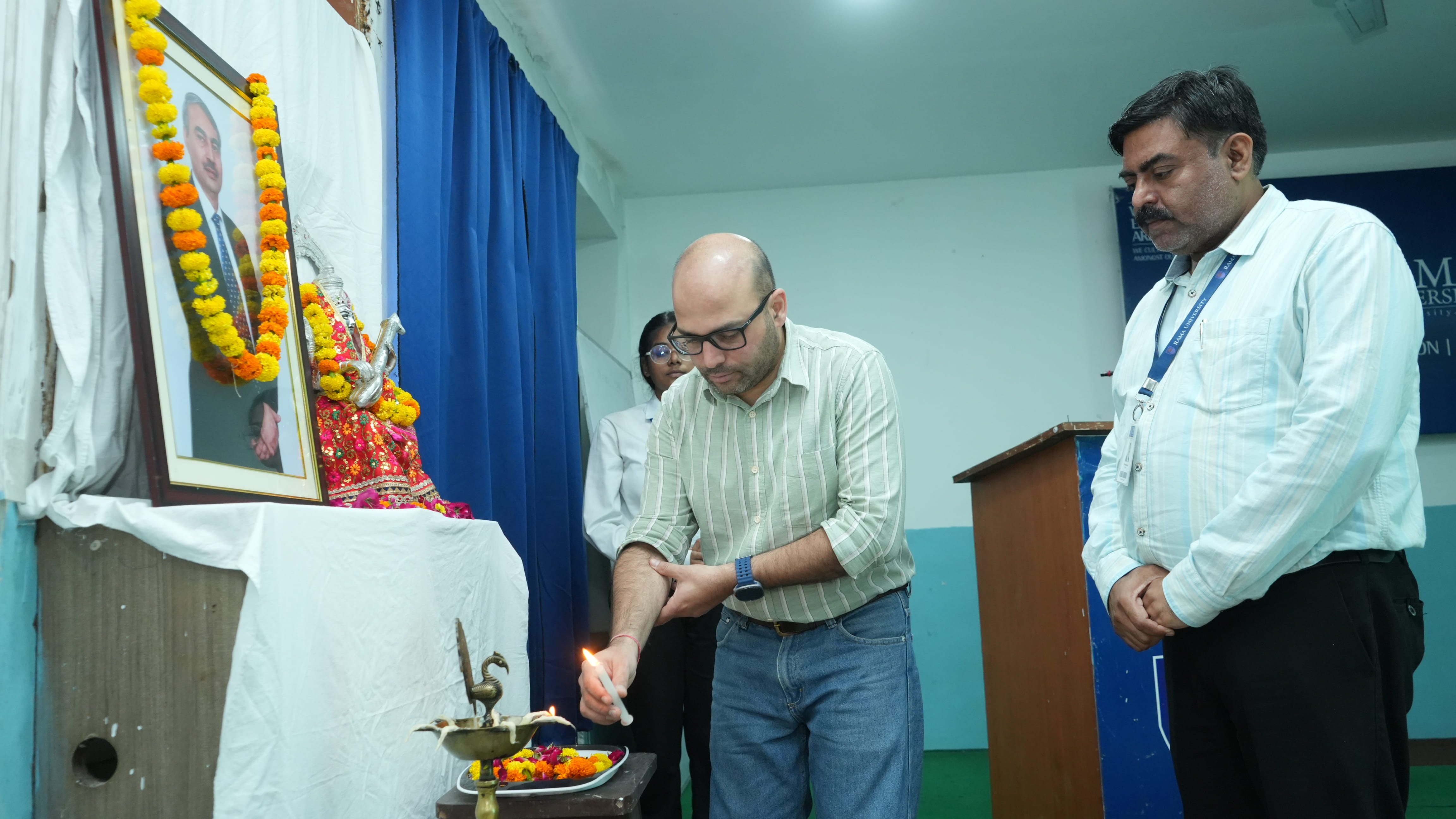
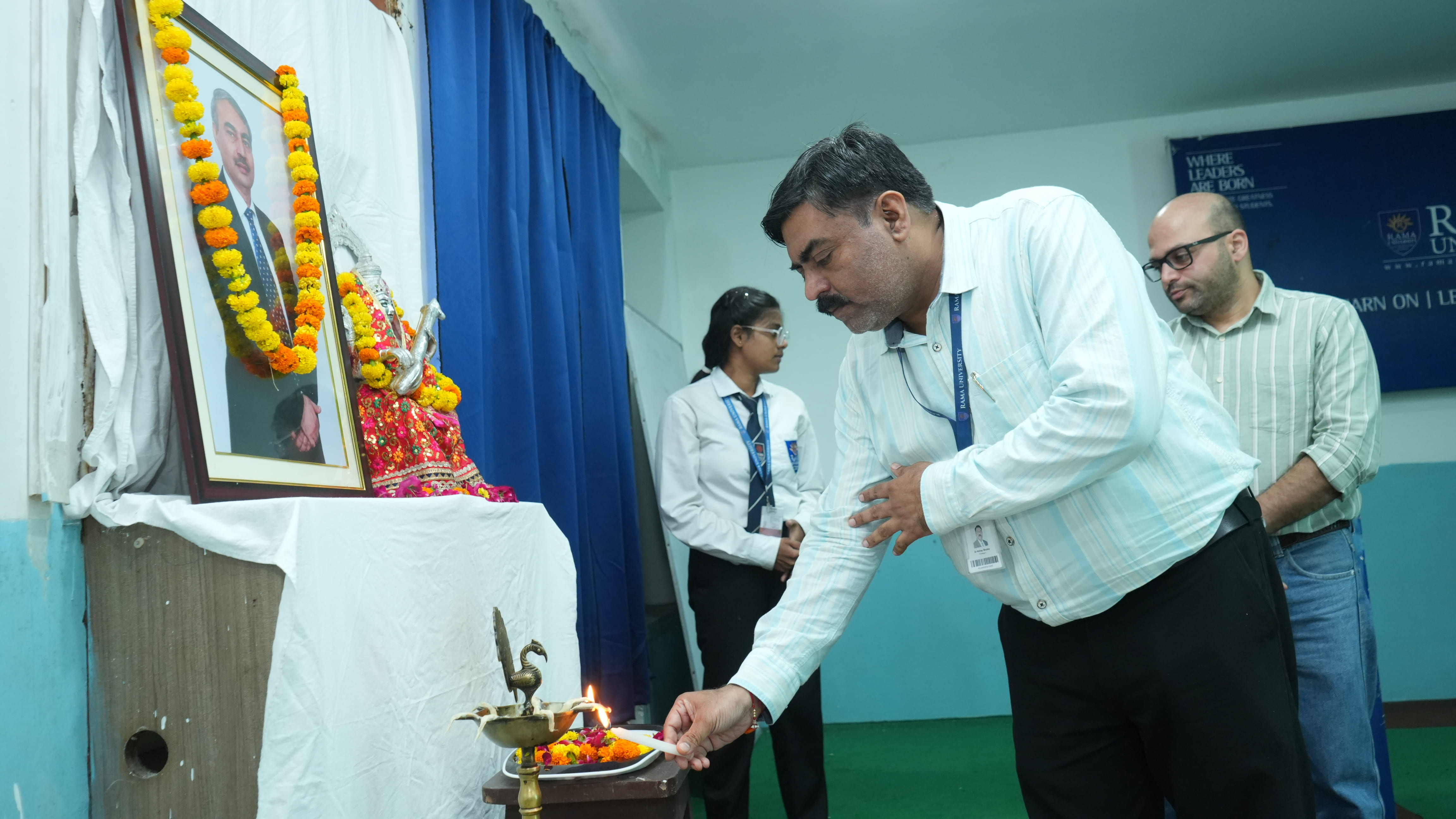
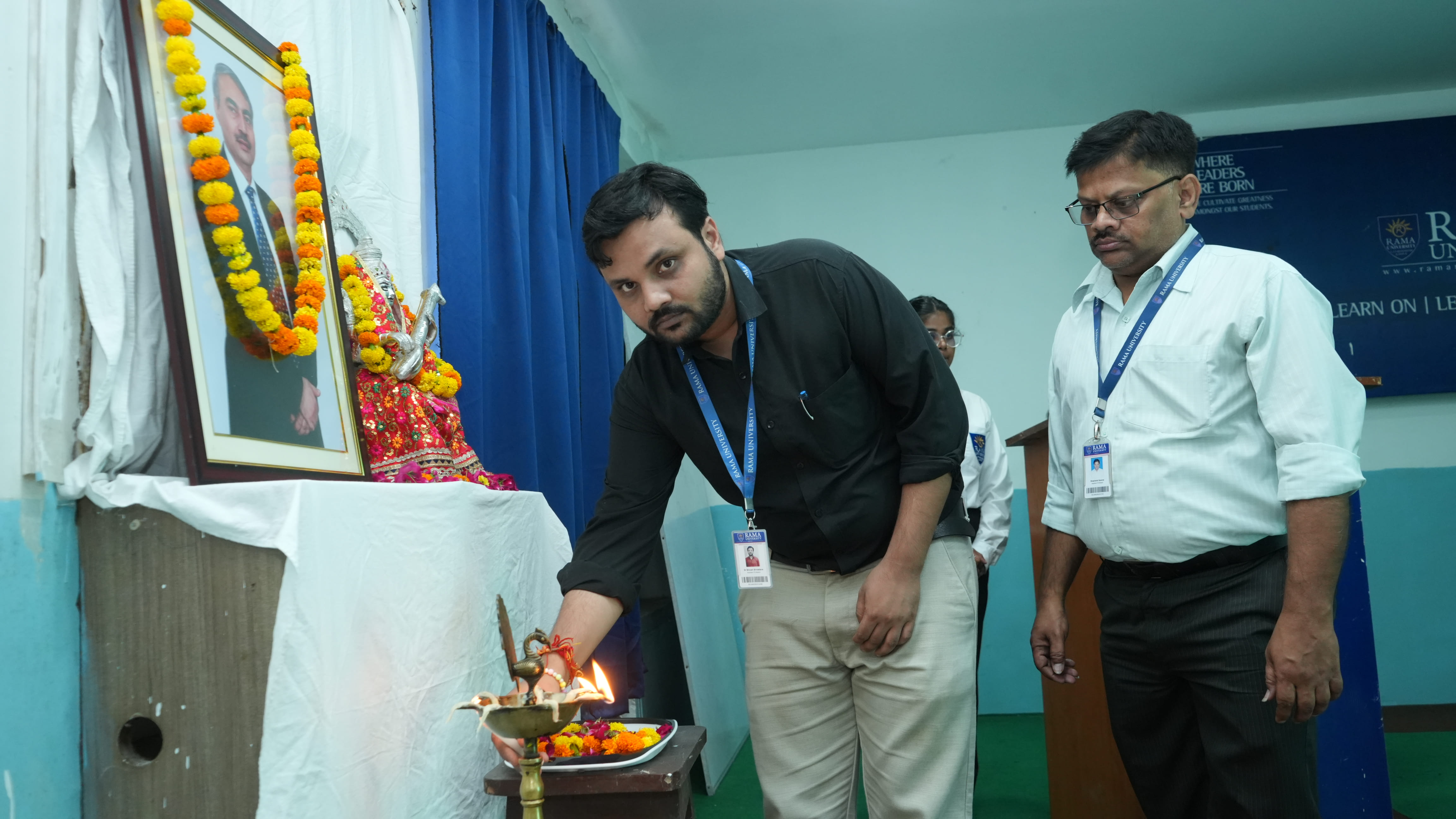
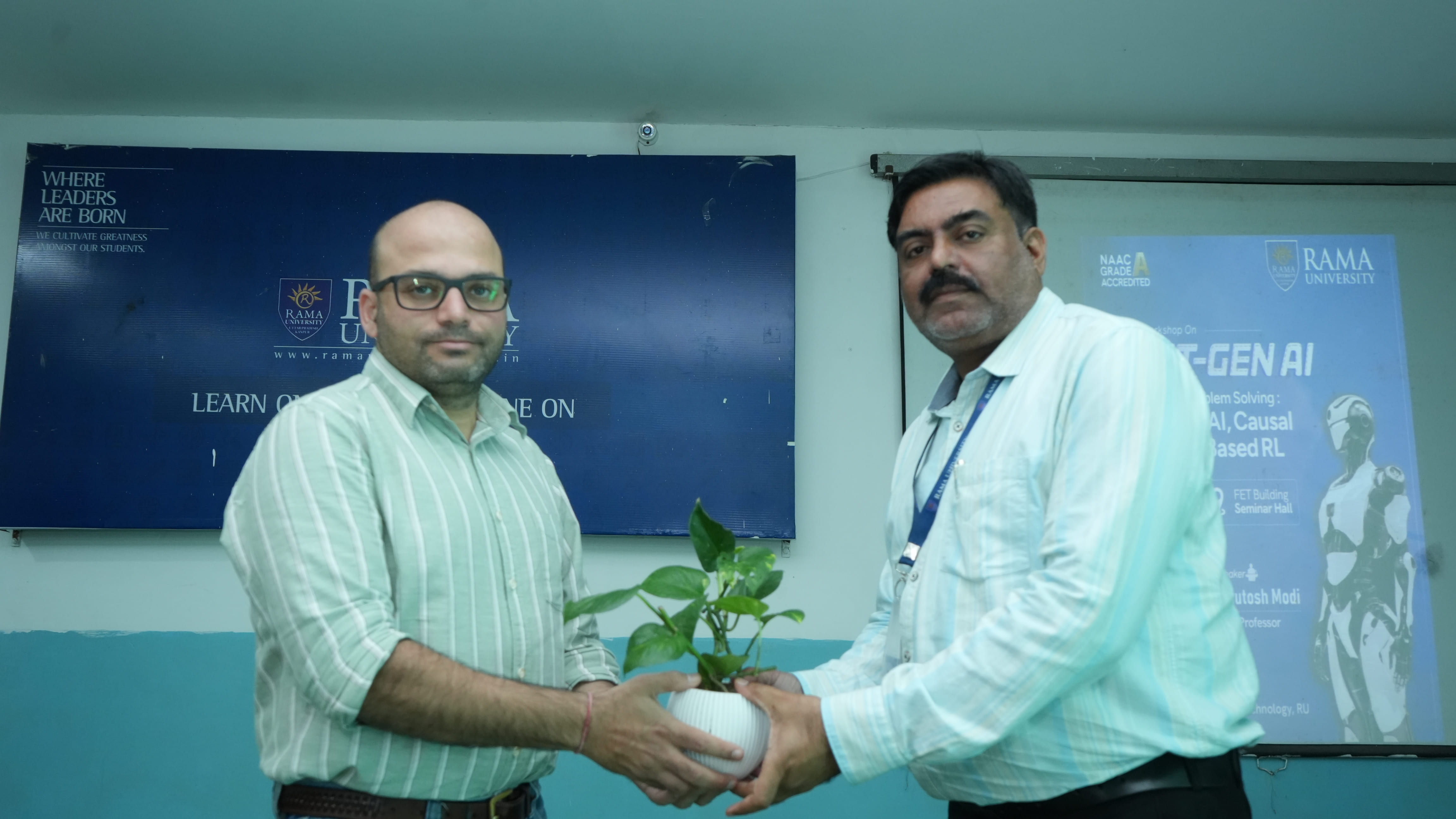
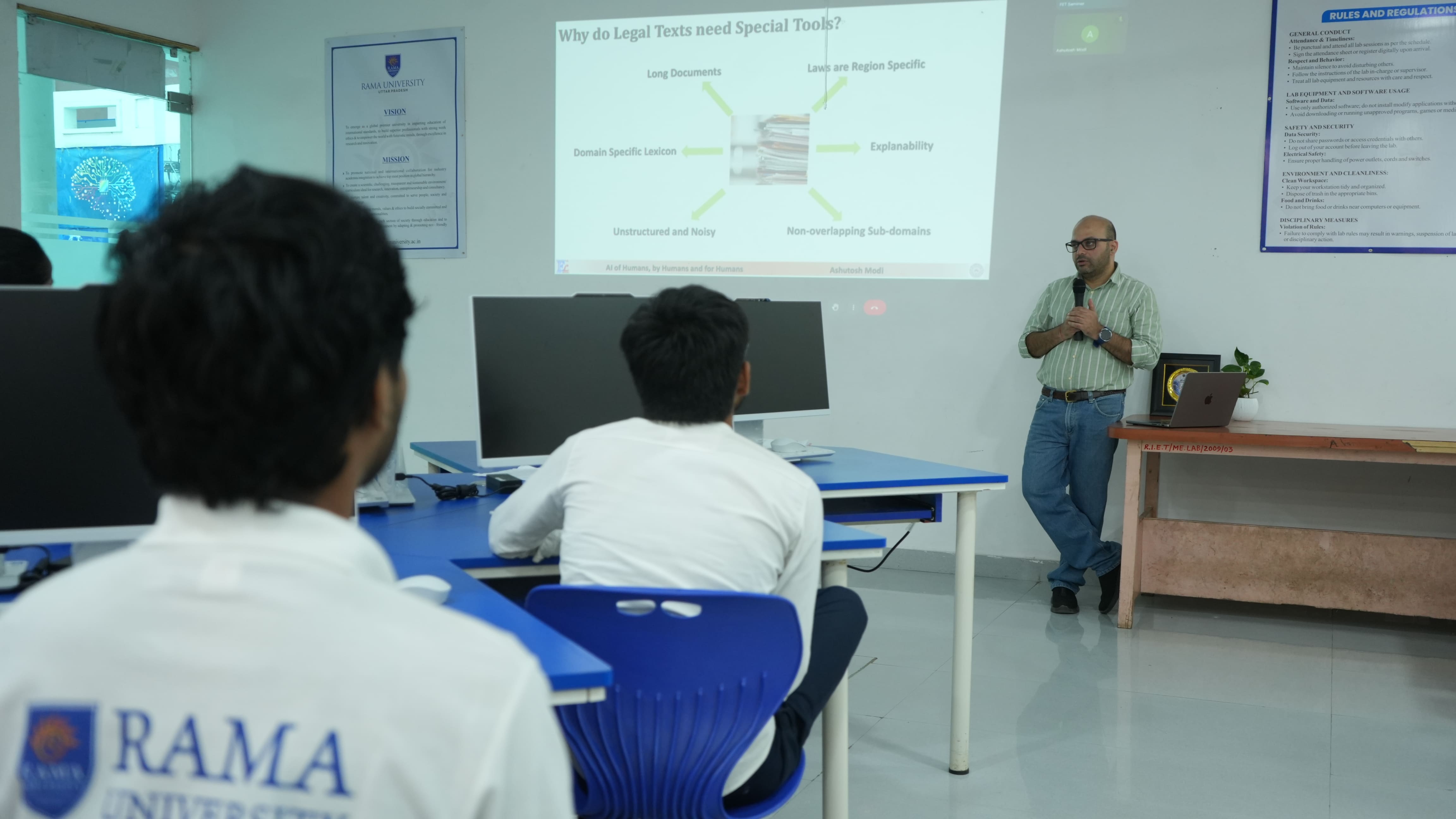
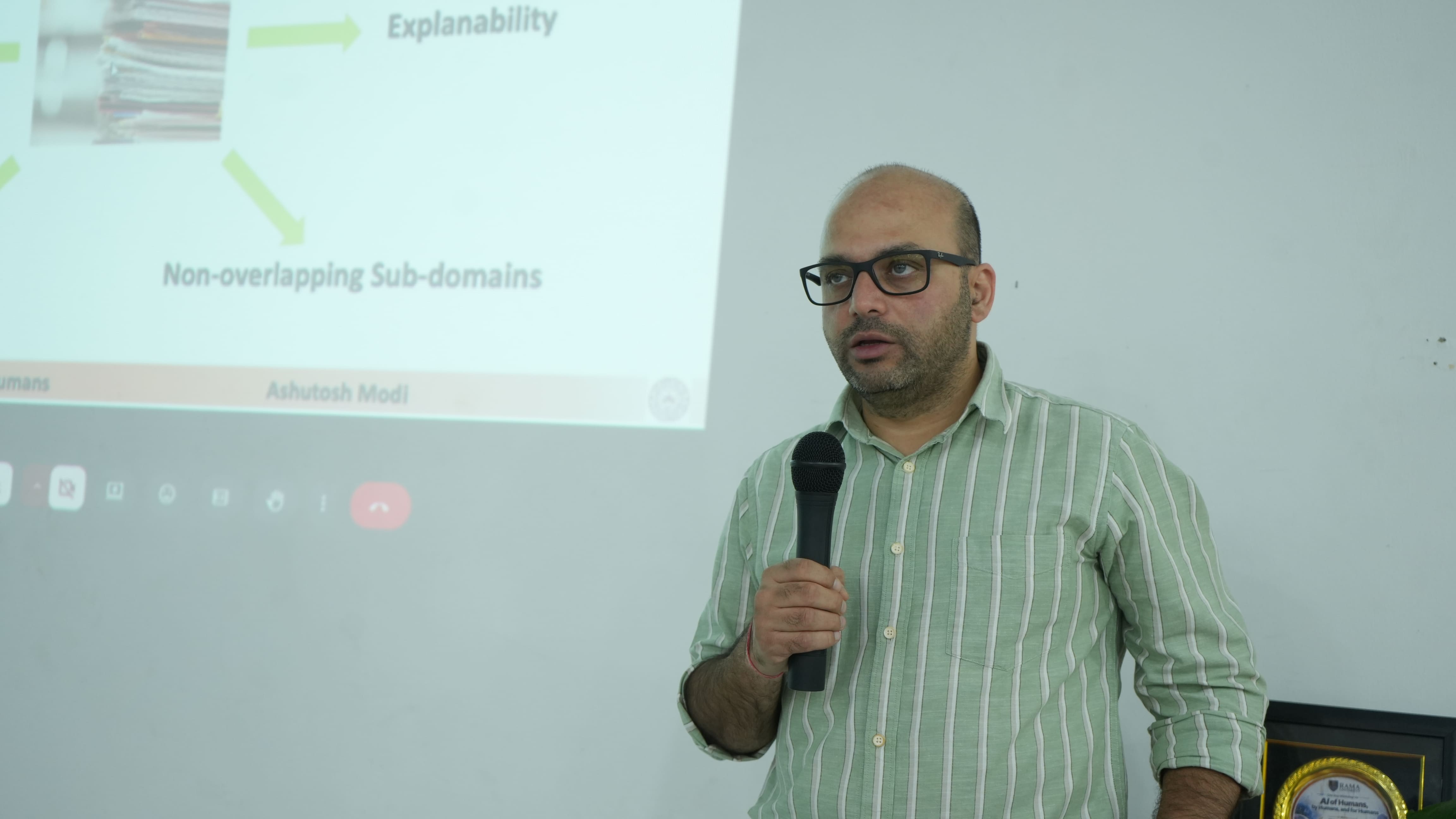
A One-Day Workshop on “NEXT-GEN AI for Intelligent Problem Solving: Generative AI, Causal NLP & Text-Based RL” was organized by the Faculty of Engineering & Technology, Rama University, on 29 September 2026 at the FET Building Seminar Hall. The workshop was conducted by Dr. Ashutosh Modi, Associate Professor, IIT Kanpur, who shared his expertise and research insights on emerging areas of Artificial Intelligence and Natural Language Processing.
The workshop provided students with a valuable opportunity to learn directly from an expert from IIT Kanpur, one of the leading institutions in the country in science, engineering, technology, and research. The presence of Dr. Modi created considerable enthusiasm among the students, who were eager to understand the latest developments in AI and their practical applications.
Technical Sessions and Key Learning
The workshop covered several advanced and emerging topics related to Generative AI, Natural Language Processing, causal reasoning, and intelligent problem solving. Dr. Modi explained the concepts using research examples and real-world applications, making the advanced topics accessible and interesting to the students.
One of the concepts discussed was the Mini-Turing Test, which focuses on whether a machine can understand a simple story and answer causal questions that a human can answer. The discussion helped students appreciate the difference between simply processing information and developing systems capable of understanding causal relationships and reasoning.
The expert also presented applications of AI in the legal domain, demonstrating how AI and NLP can be used to address complex real-world problems. Students were introduced to applications such as:
- Legal Machine Translation (L-MT)
- Legal document summarization
- Prior Case Retrieval (PCR)
- Legal Statute Identification
- Automated Judgment Prediction
- Court Judgment Prediction and Explanation (CJPE)
A particularly interesting part of the workshop was the discussion of the High Court Legal Documents Corpus (HLDC). Students learned how a large collection of legal documents can be extracted, cleaned, structured, and converted into a useful corpus for developing AI-based applications. The expert also explained how such datasets can support tasks such as prior case retrieval, bail/judgment prediction, and legal summarization.
The workshop also highlighted the importance of explainable and interpretable AI. Students learned that an AI system intended to support important decision-making should not only provide a prediction but should also be capable of explaining why a particular prediction or outcome was generated.
Student Participation and Response
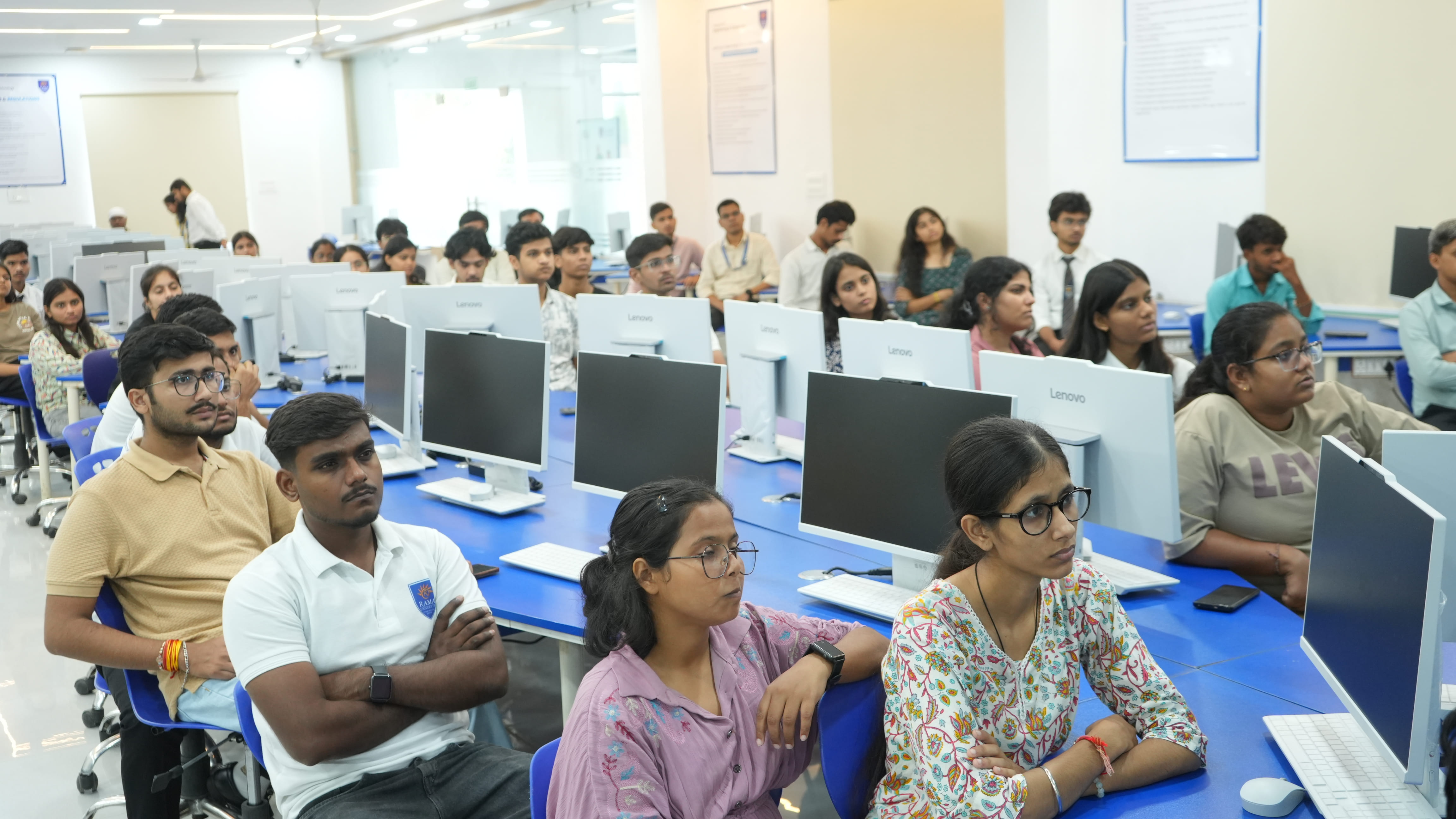
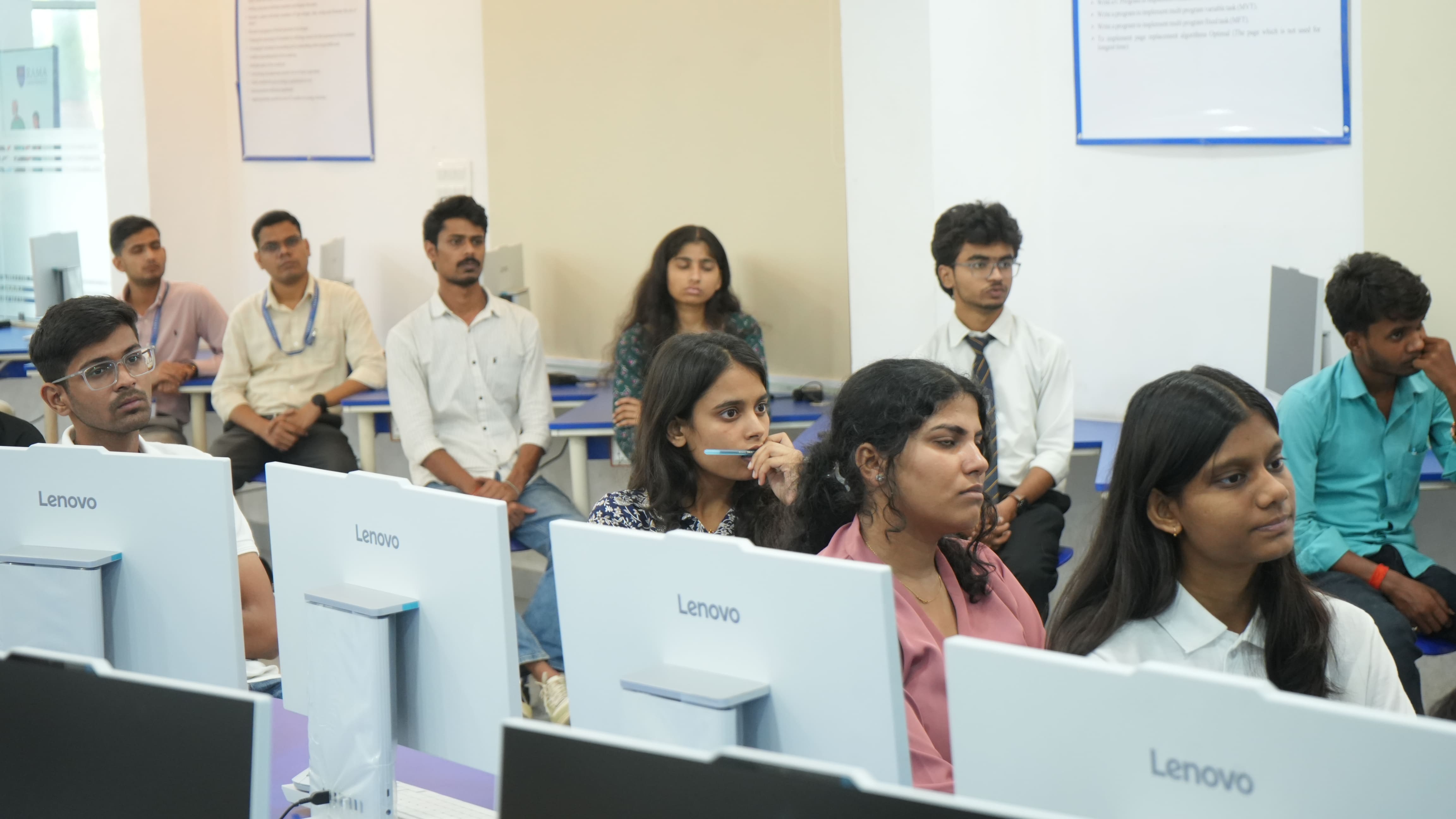
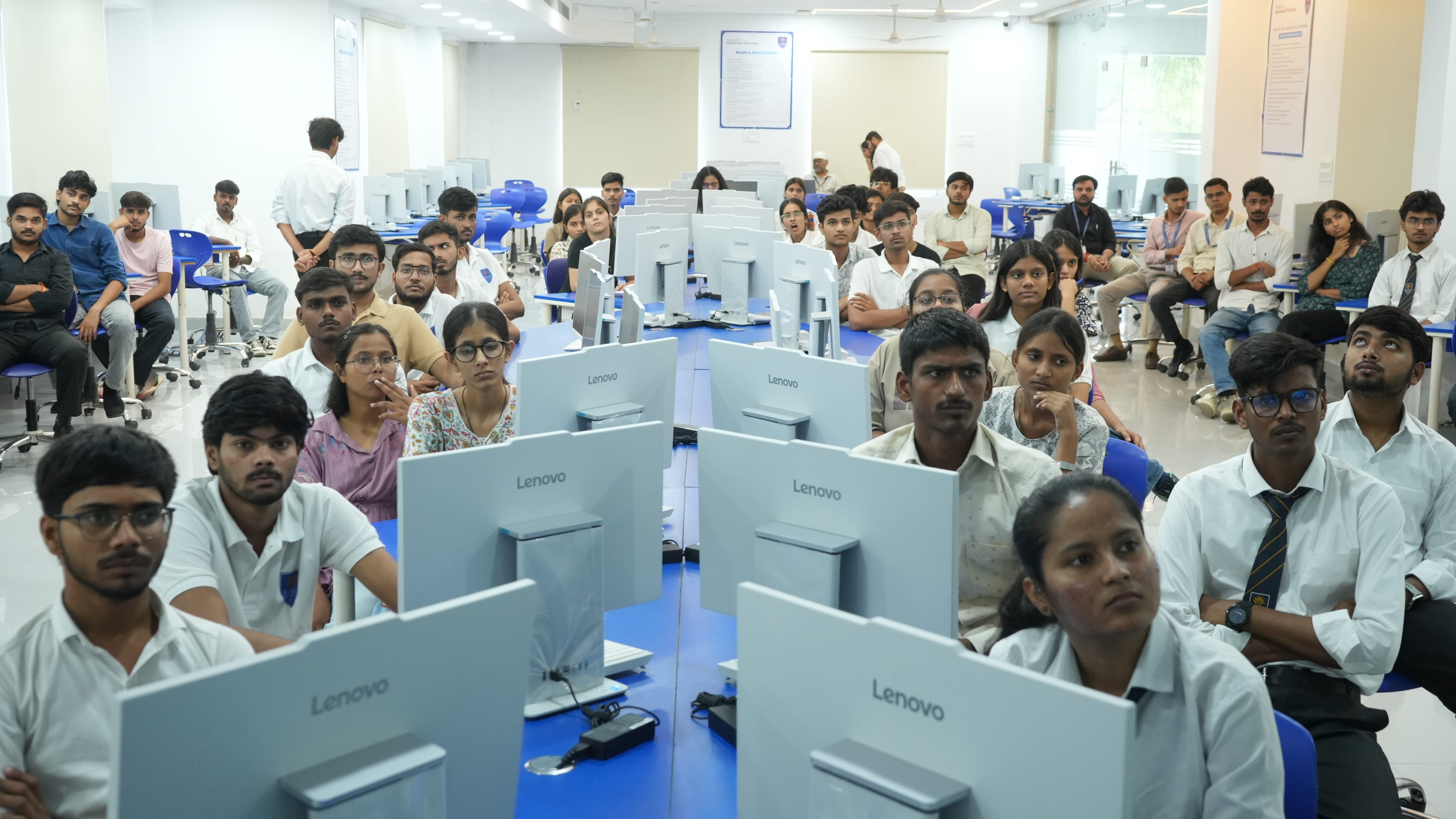
The workshop received an enthusiastic response from the students. The students remained attentive throughout the session and showed considerable curiosity about the concepts being presented. The research-oriented approach of Dr. Ashutosh Modi from IIT Kanpur encouraged students to think beyond conventional classroom applications of AI.
Students were particularly interested in understanding how Generative AI and Large Language Models can be used for reasoning, information retrieval, summarization, translation, and complex problem solving. The examples related to legal AI helped them understand how advanced AI techniques can be applied to highly specialized domains.
The interaction also motivated students to ask questions about AI research, machine learning models, NLP, datasets, higher studies, and career opportunities in emerging AI technologies. The opportunity to interact with an IIT Kanpur faculty member gave students a broader perspective about research and innovation at premier institutes in India.
Learning Outcomes
By the end of the workshop, students were able to:
- Understand the emerging role of Generative AI in intelligent problem solving.
- Gain introductory exposure to Causal NLP and causal reasoning.
- Understand the concept of Text-Based Reinforcement Learning (Text-Based RL).
- Learn about applications of AI and NLP in the legal domain.
- Understand the role of large-scale legal document corpora in AI research.
- Learn about legal document retrieval, summarization, translation, and statute identification.
- Understand the importance of explainable and interpretable AI systems.
- Explore the possibilities of AI research and higher studies.
- Gain motivation and exposure through interaction with an expert from IIT Kanpur.
Conclusion
The One-Day Workshop on “NEXT-GEN AI for Intelligent Problem Solving: Generative AI, Causal NLP & Text-Based RL” was a highly informative and enriching academic activity. The session successfully introduced students to advanced applications of Artificial Intelligence and Natural Language Processing while providing them with exposure to ongoing research in these rapidly developing areas.
The participation of Dr. Ashutosh Modi, Associate Professor, IIT Kanpur, was the major highlight of the workshop. His research-oriented presentation and interaction with the students generated significant enthusiasm and curiosity among the participants. The students gained not only technical knowledge but also a valuable understanding of how AI research can be transformed into solutions for real-world problems.
Overall, the workshop served as an excellent platform for knowledge sharing, research awareness, innovation, and student interaction, and motivated students to further explore Generative AI, NLP, causal reasoning, reinforcement learning, and other emerging areas of Artificial Intelligence.
Date: 29 September 2026
Time: 2:00 PM onwards
Venue: FET Building, Seminar Hall, Rama University
Guest Speaker: Dr. Ashutosh Modi, Associate Professor, IIT Kanpur
Organized by: Faculty of Engineering & Technology, Rama University, Kanpur