News
Rangoli Making Seva Ka Rang Rashtra Ke Sang Celebrating India’s Vision of Viksit Bharat
22 Oct 2026
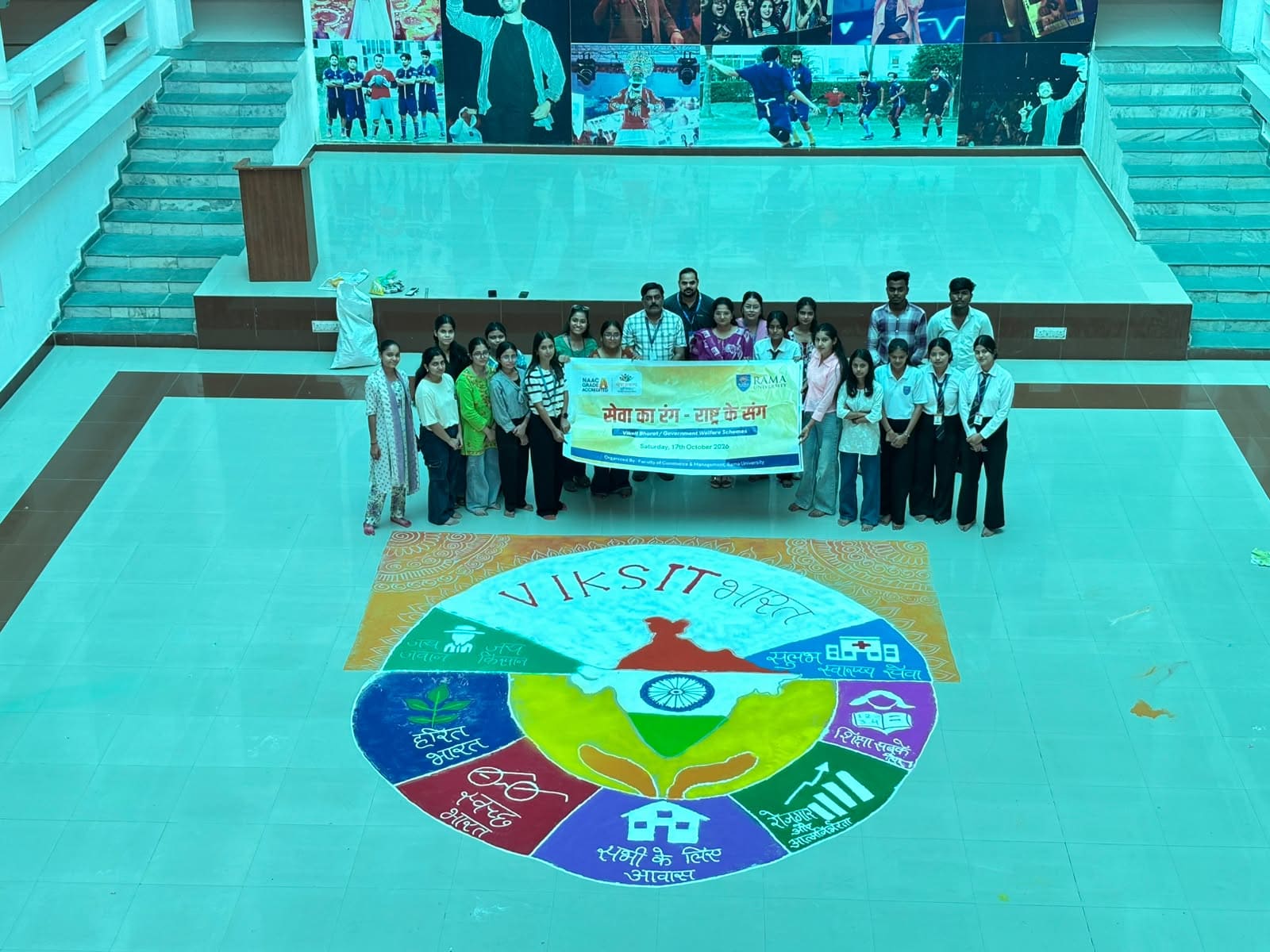
RANGOLI MAKING – “Seva Ka Rang Rashtra Ke Sang”
Theme: Viksit Bharat (Viksit Bharat)
Date: 17 October 2026
Venue: College/University Campus
Rangoli Size: 18 × 18 feet
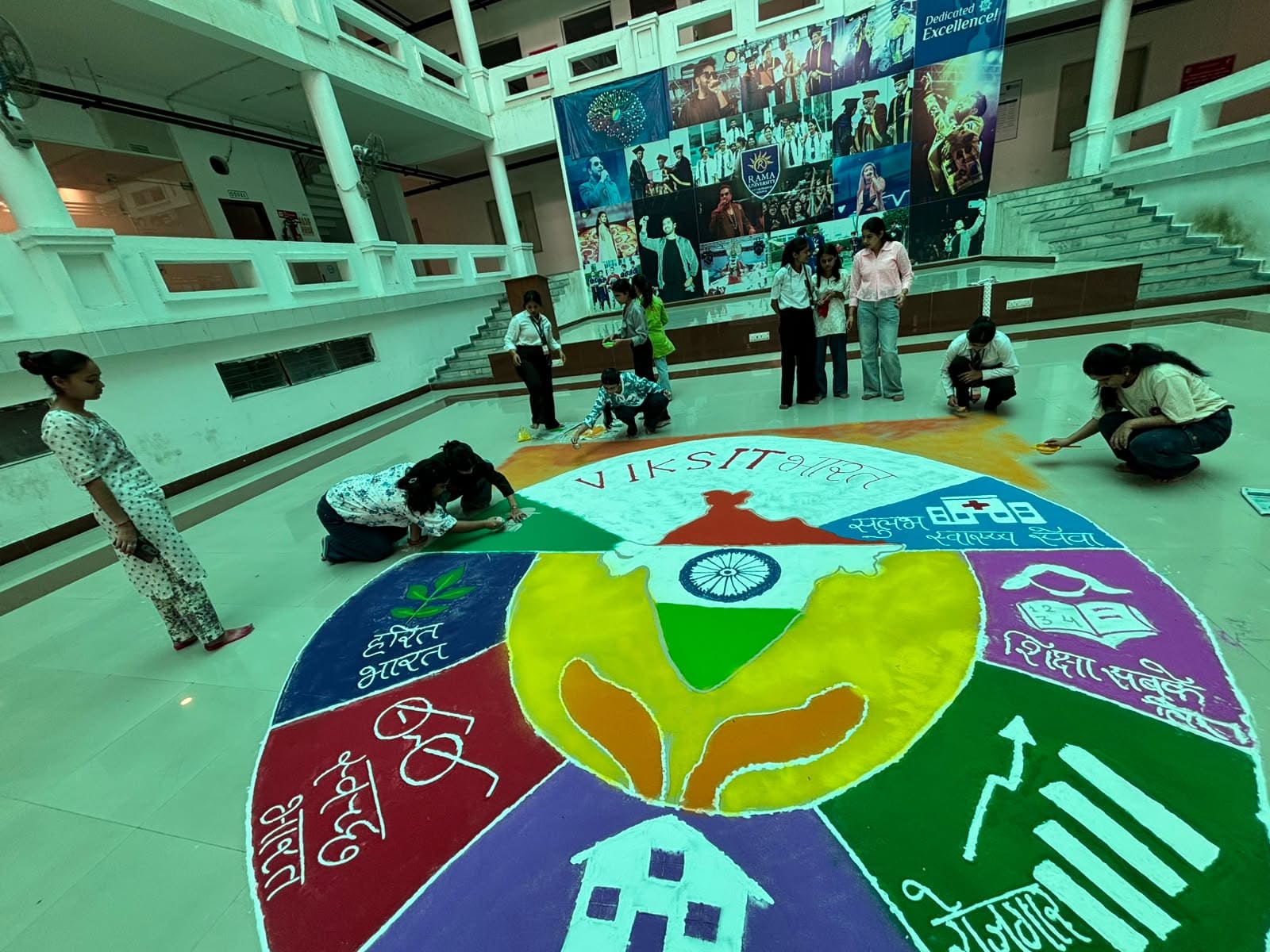
Under the initiative “Seva Ka Rang Rashtra Ke Sang,” a large rangoli was created on 17 October 2026 at the college/university campus, in accordance with the prescribed guidelines. The activity used traditional Indian art to nurture national consciousness and social responsibility, and to draw attention to the country’s developmental priorities.
Its theme was “Viksit Bharat” (Viksit Bharat), the vision of an inclusive, prosperous, sustainable, and self-reliant nation.
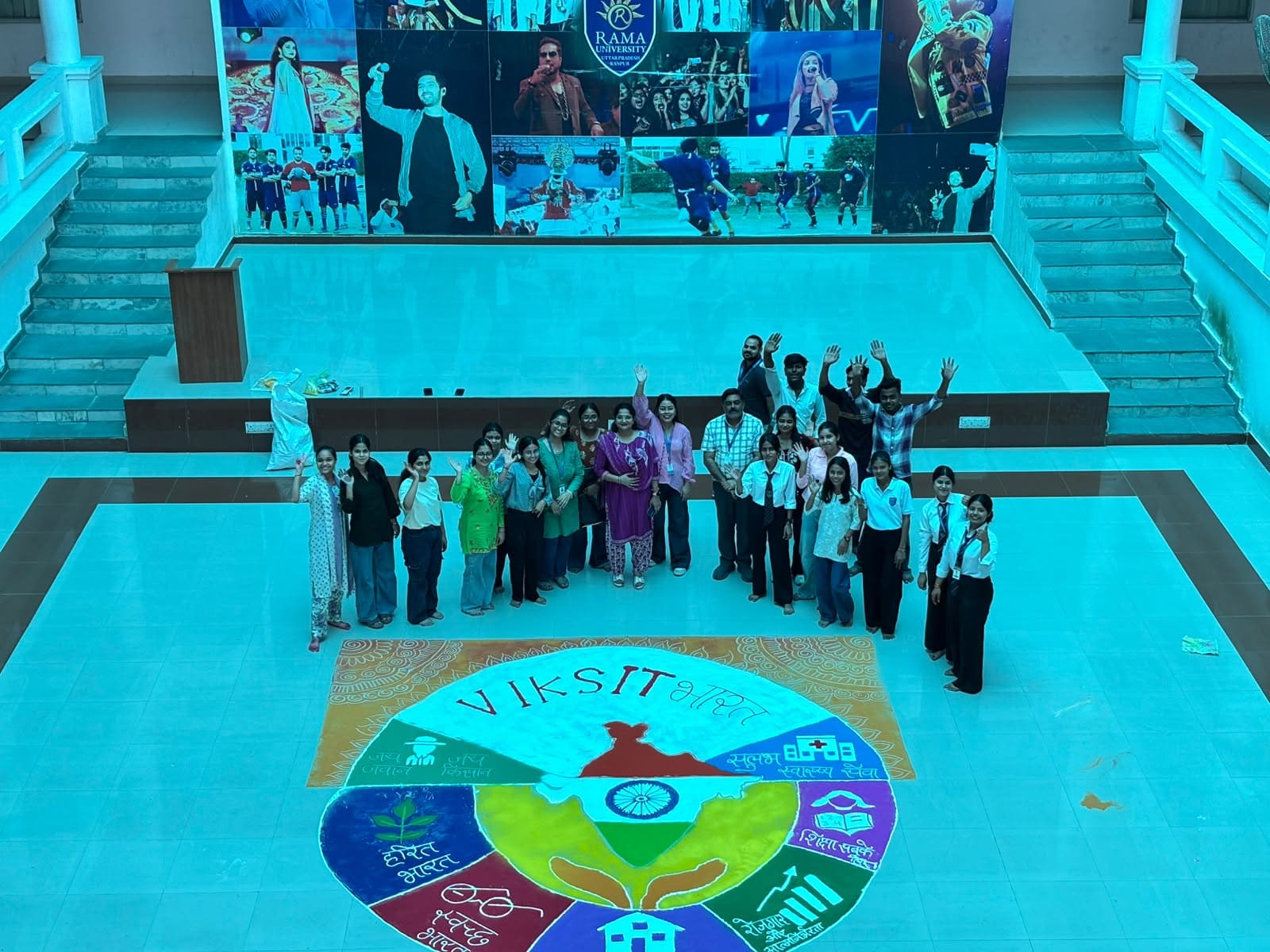
The rangoli measured 18 × 18 feet, covering 324 square feet, and was laid out as a circular composition. At its centre were the map of India in the national tricolour and the Ashoka Chakra, symbolizing unity, integrity, and collective progress. Around it, separate sections represented the sectors that drive national development:
-
Kisan Samriddhi: Agricultural prosperity and the welfare of farmers.
-
Sulabh Swasthya Seva: Accessible healthcare and public well-being.
-
Shiksha Sabke Liye: Equitable access to education and learning opportunities.
-
Rozgar Aur Aatmanirbharta: Employment generation, entrepreneurship, and self-reliance.
-
Sabhi Ke Liye Aawas: Access to safe and adequate housing.
-
Swachh Bharat: Cleanliness, sanitation, and civic responsibility.
-
Harit Bharat: Environmental conservation and sustainable development.
Vibrant colours, geometric patterns, floral motifs, and thematic illustrations brought India’s cultural heritage and its developmental aspirations together in a single design.
Objectives
The activity aimed to:
-
Promote awareness of the Viksit Bharat vision.
-
Encourage traditional Indian art as a medium for social messaging.
-
Foster patriotism, civic responsibility, and participation in nation-building.
-
Communicate public welfare and inclusive growth through creative visual expression.
The work was carried out with careful attention to symmetry, colour coordination, and thematic accuracy. The central elements were kept bold and clear, while the surrounding panels were arranged so that each message could be read and understood on its own. As a result, viewers could easily see the connection between India’s cultural traditions and its aspirations for progress.
By expressing national development through a familiar traditional art form, the rangoli gave viewers an engaging and approachable message about the shared responsibility of citizens in building a developed India. It also showed how cultural expression can inspire national pride and encourage civic participation.
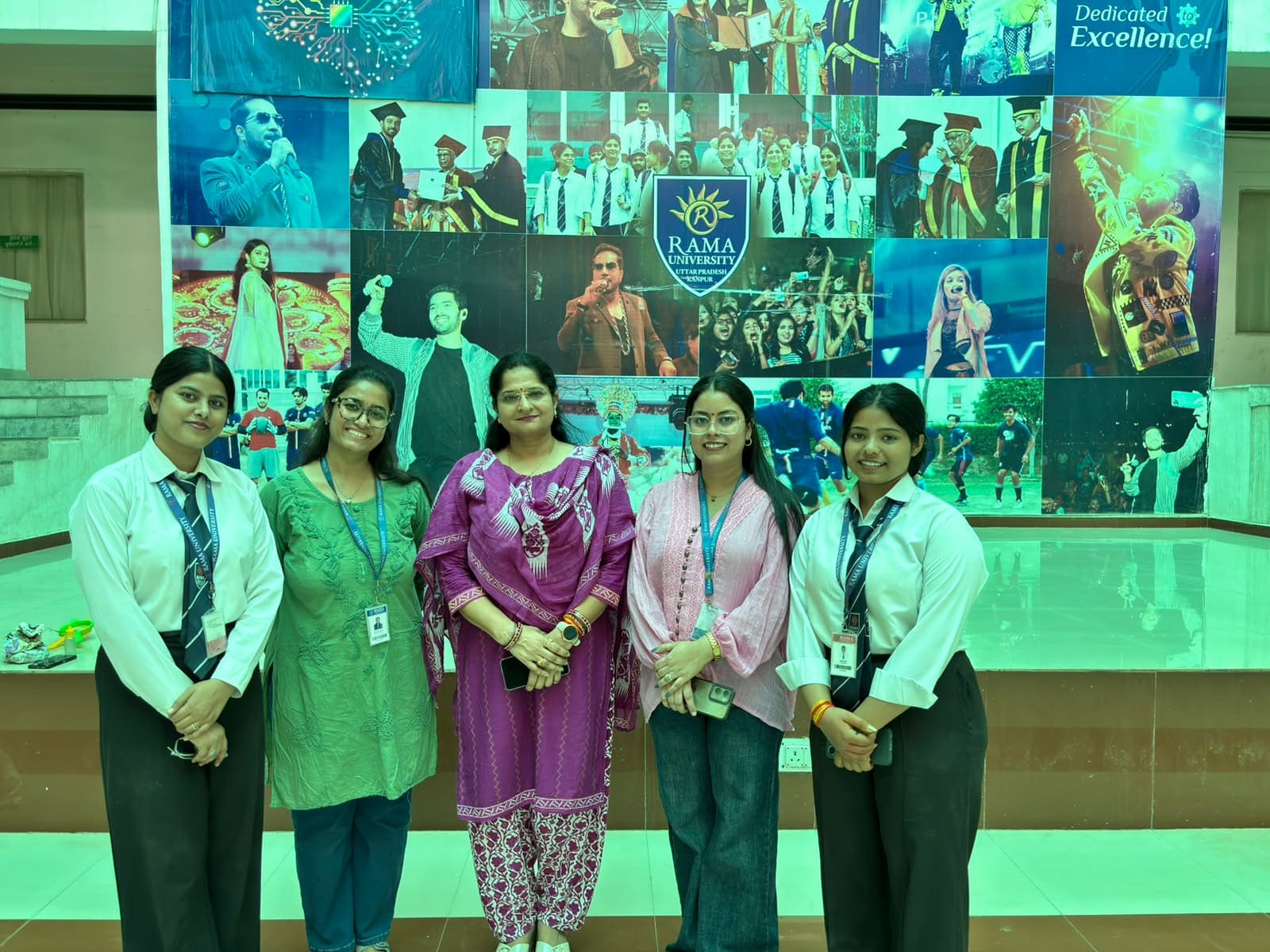
The rangoli created under “Seva Ka Rang Rashtra Ke Sang” combined artistic creativity, cultural heritage, and developmental messaging into a meaningful portrayal of “Viksit Bharat.” The event was held under the guidance of Dean Prof. (Dr.) Indu Shukla, and we express our sincere gratitude for her valuable support and encouragement.