News
Students Undertake Three-Day Educational and Industrial Exposure Visit to Varanasi for Practical Agricultural Learning
03 Oct 2026
Educational and Industrial Exposure Visit to Varanasi
Organized by: Faculty of Agricultural Sciences and Allied Industries
Rama University, Kanpur, Uttar Pradesh
Visit Duration: 28–30 September 2026
Destination: Varanasi, Uttar Pradesh
Participating Students: B.Sc. Agriculture Students
Visit Type: Educational and Industrial Exposure Visit
- Introduction
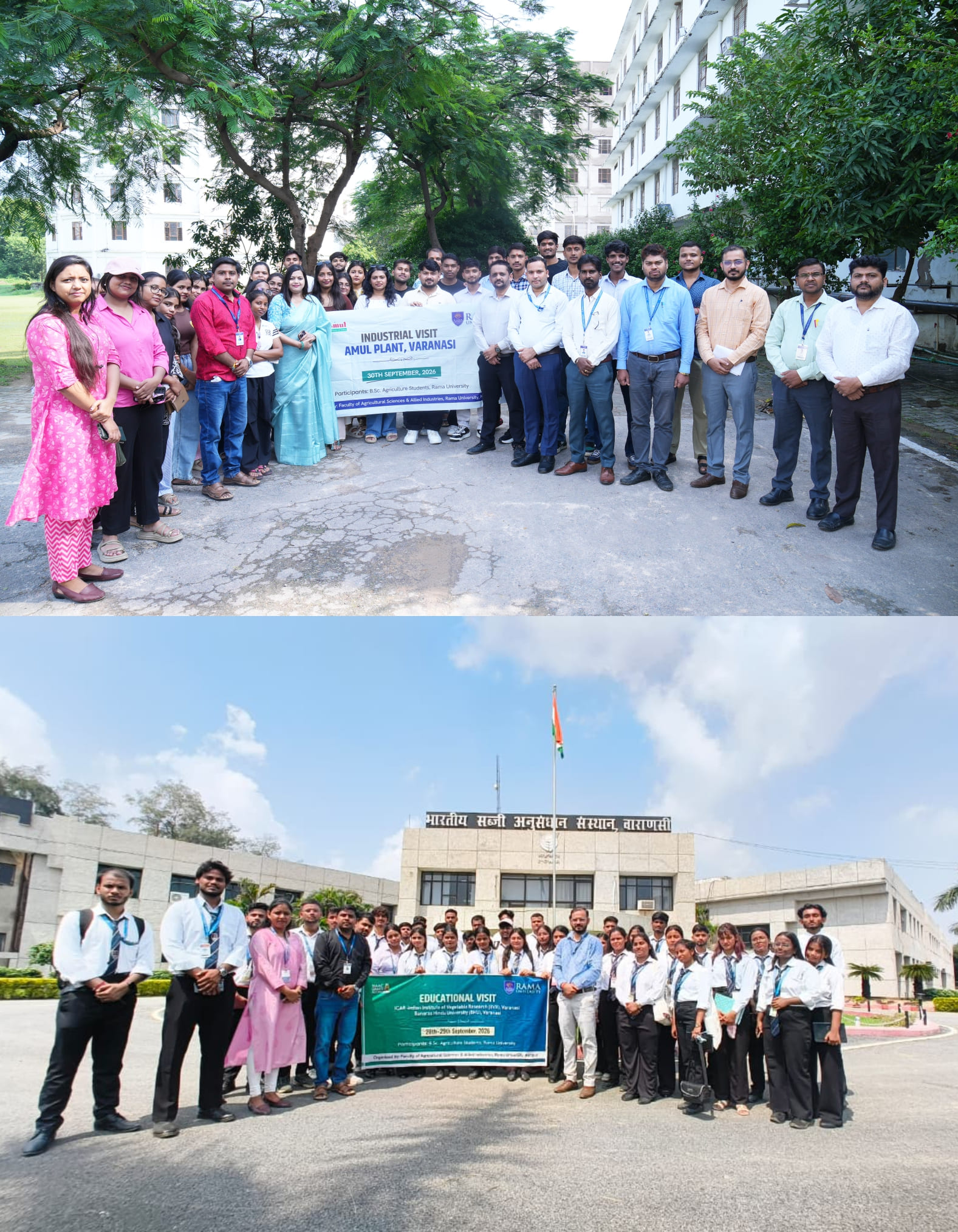
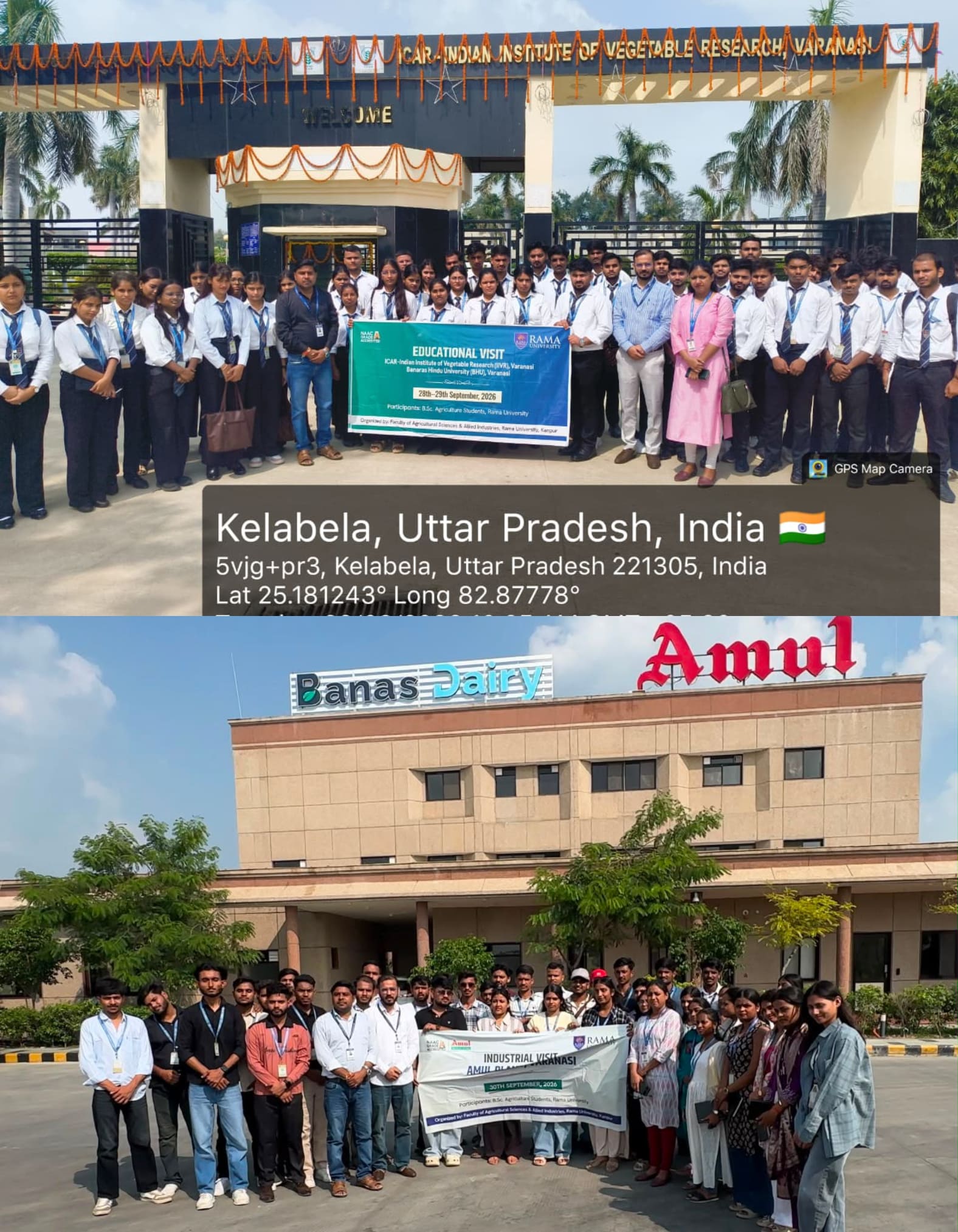
The Faculty of Agricultural Sciences and Allied Industries, Rama University, Kanpur, organized a three-day educational and industrial exposure visit to Varanasi from 28 September to 30 September. The primary objective of the visit was to provide students with practical exposure to advanced agricultural technologies, horticultural practices, agricultural economics, entrepreneurship, and modern dairy processing systems.
During the visit, students explored three important institutions: the ICAR–Indian Institute of Vegetable Research (IIVR), Banaras Hindu University (BHU), and Banas Amul Dairy. The programme provided students with opportunities to interact with scientists, professors, and industry professionals and to understand the practical applications of their academic knowledge.
- Objectives of the Visit
- To provide practical exposure to advanced agricultural and horticultural technologies.
- To understand high-tech nursery management and advanced seed management practices.
- To gain knowledge about organic farming, precision farming, and mushroom cultivation.
- To interact with agricultural scientists and subject experts.
- To understand agricultural entrepreneurship, farm management, budgeting, and economic decision- making.
- To gain industrial exposure to modern milk collection, processing, and dairy management systems.
- Day-wise Activities and Observations
Day 1: Visit to ICAR–Indian Institute of Vegetable Research (IIVR), Varanasi
Date: 28 September
On the first day, students visited the ICAR–Indian Institute of Vegetable Research (IIVR), Varanasi, a premier research institution dedicated to vegetable crop improvement and advanced vegetable production technologies.
During the visit, students observed several important agricultural facilities and research activities, including:
- High-Tech Nursery: Students learned about modern nursery infrastructure, protected cultivation, and scientific seedling production techniques.
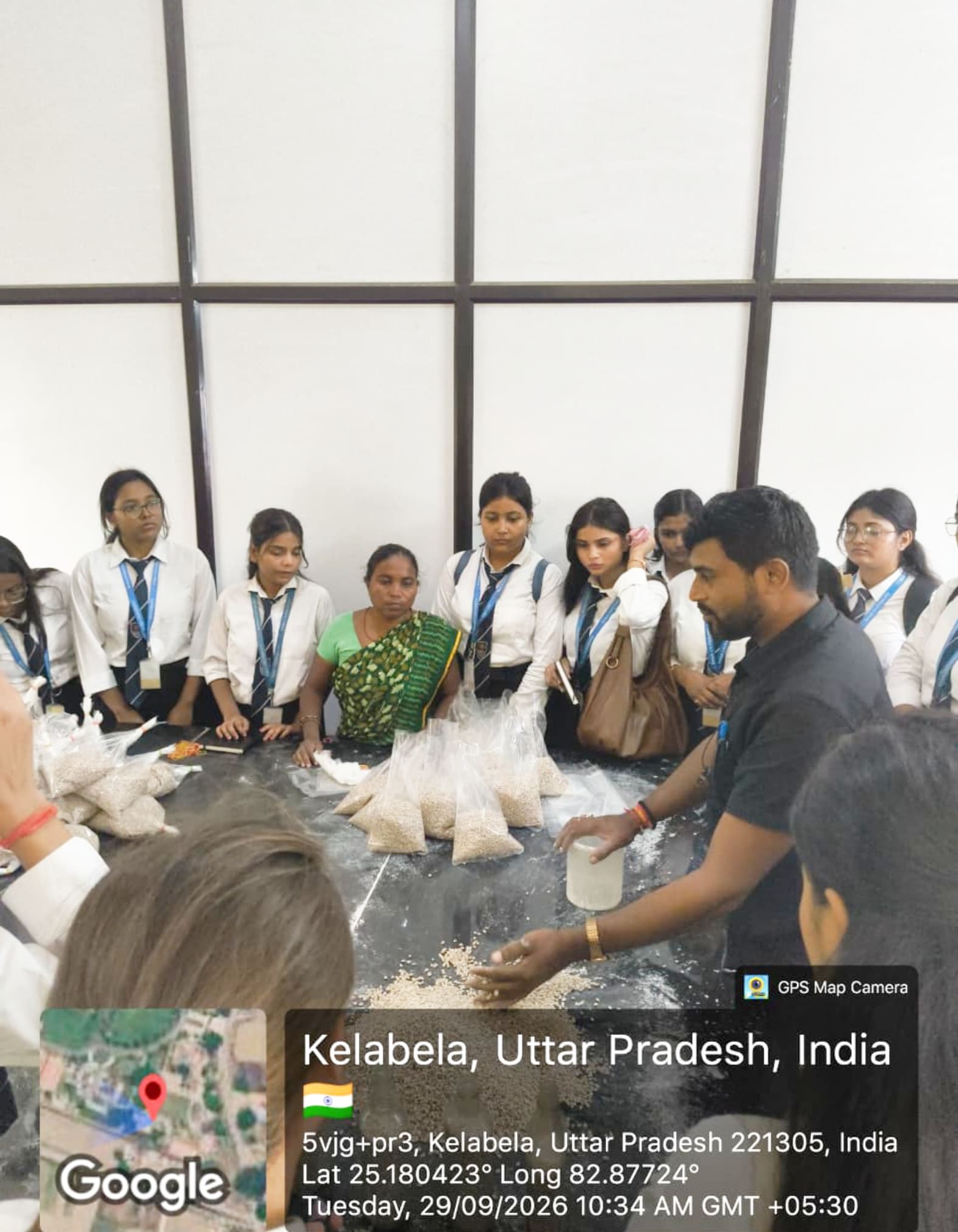
- Advanced Seed Management: Students gained knowledge of improved seed handling, quality management, and scientific seed production practices.
- Advanced Nursery Management: Students observed modern nursery techniques and the importance of healthy planting material in vegetable production.
- Mushroom Training Centre: Students were introduced to mushroom cultivation and its potential as an alternative agricultural enterprise.
- Organic Farming: Students explored organic farming practices and the importance of sustainable agricultural production.
- Precision Farming: Students learned about precision farming approaches and the efficient use of agricultural resources.
- Vegetable Crop Diversity: Students observed several varieties of different vegetable crops and learned about varietal diversity and crop improvement.
During the visit, Dr. Vidyasagar, Principal Scientist, IIVR, interacted with the students and provided valuable guidance on vegetable crop improvement, modern research approaches, and the development of improved crop varieties. The interaction helped students understand the role of agricultural research in enhancing productivity, quality, and sustainability.
The visit was highly informative and provided valuable practical exposure to modern vegetable research and production systems.
Day 2: Visit to the Department of Agriculture, Banaras Hindu University (BHU)
Date: 29 September
On the second day, students visited the Department of Agriculture at Banaras Hindu University, Varanasi. The academic interaction focused on horticulture, agricultural economics, entrepreneurship, and farm management.
During the academic session, Professor Dr. Akhilesh Pal (B.H.U) delivered an informative discussion on Advance Nursery Management. He introduced students to important horticultural concepts, crop management practices, and the significance of horticulture in agricultural development.
Following this, Professor Dr. O. P. Singh (B.H.U.) interacted with the students and provided valuable insights into agricultural entrepreneurship, agricultural economics, farm management, and budgeting.
The major topics covered included:
- Principles and practices of horticultural crop production.
- The role of horticulture in agricultural diversification.
- Agricultural entrepreneurship and business opportunities.
- Farm management principles and resource allocation.
- Farm budgeting and economic decision-making.
- The importance of financial planning in agricultural enterprises.
The academic interaction enabled students to connect classroom learning with practical agricultural and business management applications. It also encouraged them to explore entrepreneurship and professional opportunities in the agricultural sector.
Day 3: Industrial Visit to Banas Amul Dairy
Date: 30 Septmber.
On the third day, students visited Banas Amul Dairy to gain industrial exposure to modern dairy operations and milk processing technologies.
The visit provided students with an opportunity to understand the functioning of a large-scale dairy enterprise and the integration of technology into the dairy supply chain.
The major areas of learning included:
- Modern Milk Collection Systems: Students gained knowledge of organized milk collection procedures and the importance of systematic procurement.
- Milk Handling and Quality Control: Students were introduced to the importance of milk quality assessment, hygiene, and quality control during milk handling.
- Advanced Milk Processing: Students learned about modern milk processing systems and the different stages involved in dairy operations.
- Dairy Plant Management: Students gained an understanding of industrial-scale dairy operations and the importance of efficient plant management.
- Dairy Supply Chain: Students learned about the role of organized dairy networks in connecting milk producers with processing facilities and markets.
The industrial exposure helped students understand the relationship between agricultural production, dairy-based enterprises, value addition, and organized marketing systems.
- Learning Outcomes
The three-day educational and industrial visit provided students with meaningful practical learning experiences. The key learning outcomes were:
- Enhanced understanding of advanced vegetable production technologies and modern nursery management.
- Improved awareness of vegetable crop diversity, crop improvement, and agricultural research.
- Practical knowledge of organic farming, precision farming, and mushroom cultivation.
- Better understanding of horticultural practices and their economic importance.
- Knowledge of agricultural entrepreneurship, farm management, and budgeting.
- Exposure to modern dairy processing, milk collection, and quality management systems.
- Improved interaction and communication with agricultural scientists, academicians, and industry professionals.
- Greater awareness of career opportunities in agricultural research, agribusiness, entrepreneurship, and the dairy industry.
- Conclusion
The three-day educational and industrial exposure visit to Varanasi was a valuable academic experience for the B.Sc. Agriculture students of Rama University, Kanpur. The visits to ICAR–IIVR, Banaras Hindu University, and Banas Amul Dairy provided a comprehensive understanding of agricultural research, horticultural practices, agricultural economics, entrepreneurship, and modern dairy industry operations.
The direct interaction with eminent scientists and professors, along with exposure to advanced agricultural facilities and industrial processing systems, helped bridge the gap between theoretical knowledge and practical applications.
Overall, the visit contributed significantly to the academic enrichment, practical understanding, and professional awareness of the participating students.
Organized by:
Faculty of Agricultural Sciences and Allied Industries
Rama University, Kanpur