News
Noise Pollution in India: An Overlooked Environmental Hazard with Serious Consequences
10 Dec 2025
By Dr. Saloni Singh, Assistant Professor, Faculty of Engineering & Technology (FET)
Noise pollution is one of the most neglected yet rapidly intensifying environmental problems in India. Unlike air or water pollution, noise pollution is invisible, making it easier to ignore, but its effects on human health, productivity, and overall quality of life are profound and long-lasting. With rapid urbanization, population growth, expanding transportation networks, and unregulated construction activities, noise levels in Indian cities and towns have risen far beyond permissible limits. What was once considered a minor inconvenience has now evolved into a serious environmental and public health concern that demands immediate attention.
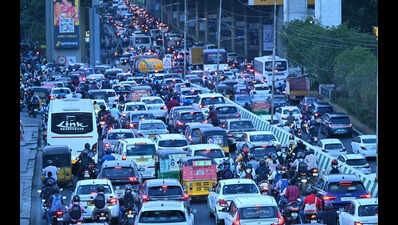
The primary sources of noise pollution in India are closely linked to urban development and modern lifestyles. Road traffic is the most significant contributor, with constant honking, poorly maintained vehicles, heavy trucks, and traffic congestion creating continuous high-decibel noise. In metropolitan cities, the problem is further intensified by railways, airports, and metro construction projects. Industrial areas contribute through machinery, generators, and manufacturing processes that often operate without adequate noise control measures. In residential areas, loudspeakers used during religious events, political gatherings, weddings, and festivals add to the growing noise burden, frequently exceeding legally permitted sound limits.
Construction activities have become another major source of noise pollution across India. Rapid infrastructure development, including highways, flyovers, residential complexes, and commercial buildings, involves the extensive use of heavy machinery such as drills, cranes, and concrete mixers. These activities often continue for long hours, sometimes even during the night, disturbing nearby residents. In many cases, construction noise regulations are poorly enforced, and public complaints go unaddressed, leading to prolonged exposure and increased stress among affected populations.
The health impacts of noise pollution are wide-ranging and severe. Prolonged exposure to high noise levels can lead to hearing impairment, including partial or permanent hearing loss. However, the effects extend far beyond auditory damage. Noise pollution is strongly associated with sleep disturbances, increased stress levels, anxiety, and reduced concentration. It can elevate blood pressure, increase the risk of cardiovascular diseases, and contribute to mental health disorders. Children exposed to excessive noise may experience learning difficulties, reduced memory, and impaired cognitive development, while elderly individuals are particularly vulnerable to sleep disruption and stress-related illnesses.
Noise pollution also affects occupational health, especially for workers in industries, construction sites, traffic management, and transportation sectors. Continuous exposure to loud machinery and engines without adequate protective measures can result in long-term health complications. Despite the risks, awareness about occupational noise hazards remains low, and the use of protective equipment such as earplugs or sound barriers is limited. This highlights the need for stronger workplace safety regulations and enforcement.
Beyond human health, noise pollution has a significant impact on wildlife and ecosystems. Animals rely heavily on sound for communication, navigation, and detecting predators. Excessive noise disrupts these natural behaviors, leading to stress, altered migration patterns, and reduced reproductive success. Urban noise affects birds by interfering with their mating calls, while underwater noise from boats and industrial activities can disturb aquatic life. The ecological imbalance caused by noise pollution often goes unnoticed but contributes to the gradual degradation of biodiversity.
Noise pollution also has social and economic implications. Reduced productivity, increased healthcare costs, and lower quality of life place an economic burden on individuals and society. Constant exposure to noise can reduce work efficiency, increase error rates, and contribute to workplace accidents. In residential areas, persistent noise leads to social conflicts, community dissatisfaction, and declining mental well-being. Over time, noisy environments can make urban living stressful and unsustainable.
The Indian government has established noise pollution regulations, including prescribed limits for residential, commercial, industrial, and silence zones. However, enforcement remains a major challenge due to lack of monitoring, insufficient manpower, and low public awareness. Many citizens are unaware of permissible noise limits or the long-term consequences of excessive noise. As a result, violations often occur without accountability, especially during festivals and public events.
Addressing noise pollution in India requires a comprehensive and collaborative approach. Technological solutions such as noise barriers, improved road design, quieter machinery, and better urban planning can significantly reduce noise levels. Public transport systems and electric vehicles can help minimize traffic-related noise. At the community level, awareness campaigns and responsible behavior—such as avoiding unnecessary honking and respecting silence zones—are essential. Educational institutions and engineering professionals have a crucial role in developing noise control technologies and promoting sustainable urban environments.
In conclusion, noise pollution is a serious yet underestimated environmental issue in India with far-reaching health, ecological, and social consequences. Combating this challenge requires strong regulatory enforcement, technological innovation, public participation, and a cultural shift toward respecting sound limits. A quieter environment is not merely a comfort but a necessity for healthy living. By recognizing noise pollution as a critical environmental concern and taking collective action, India can move toward creating healthier, more livable, and sustainable urban and rural spaces for present and future generations.