News
RAWE Orientation Programme Organized by FASAI Rama University
24 Jul 2025
As part of the ICAR-prescribed B.Sc. (Hons.) Agriculture Fourth Year Curriculum, the Rural Agricultural Work Experience (RAWE) is an essential experiential learning component under the READY (Rural Entrepreneurship Awareness Development Yojana) programme. It aims to equip students with practical knowledge, interpersonal skills, and real-time exposure to rural agricultural systems.
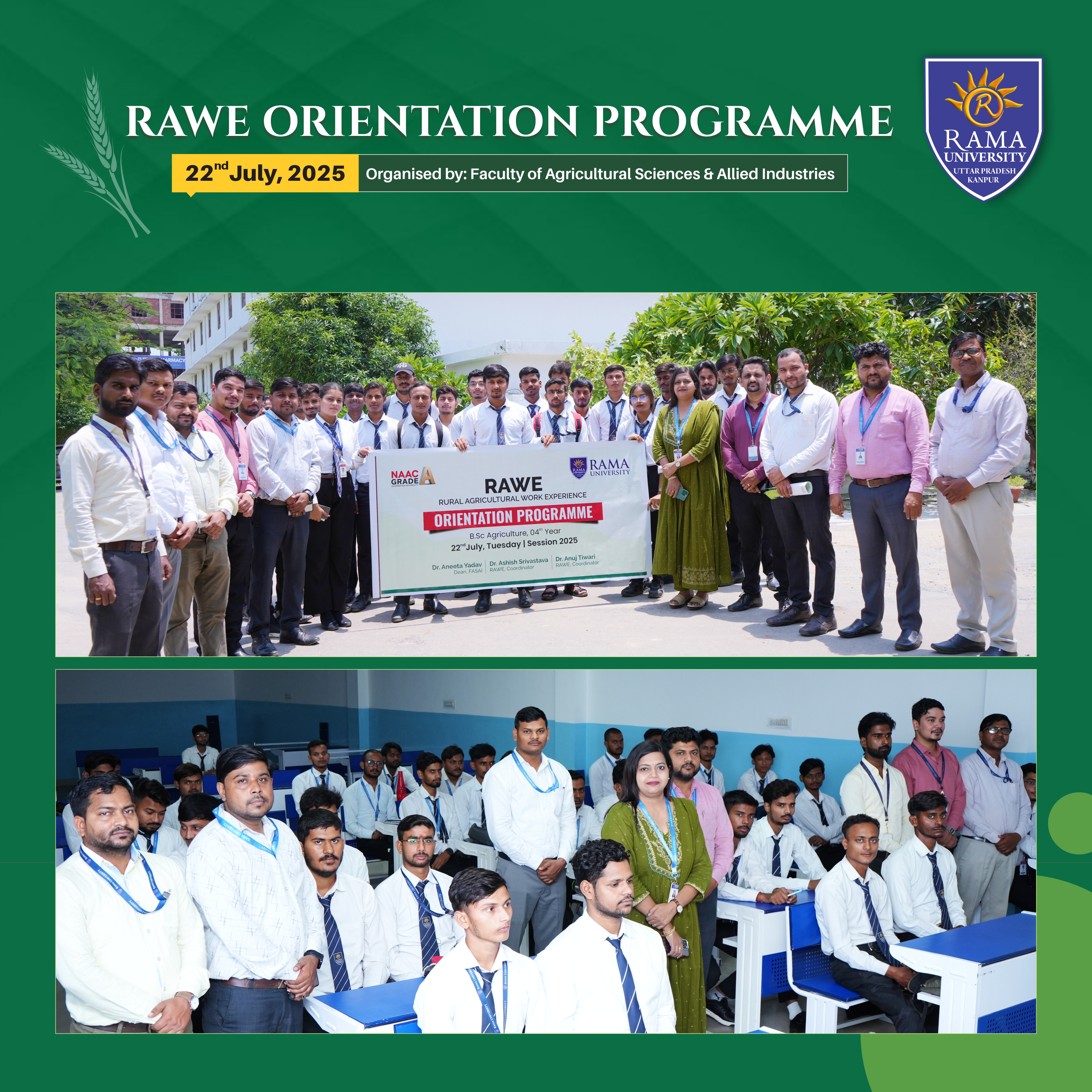
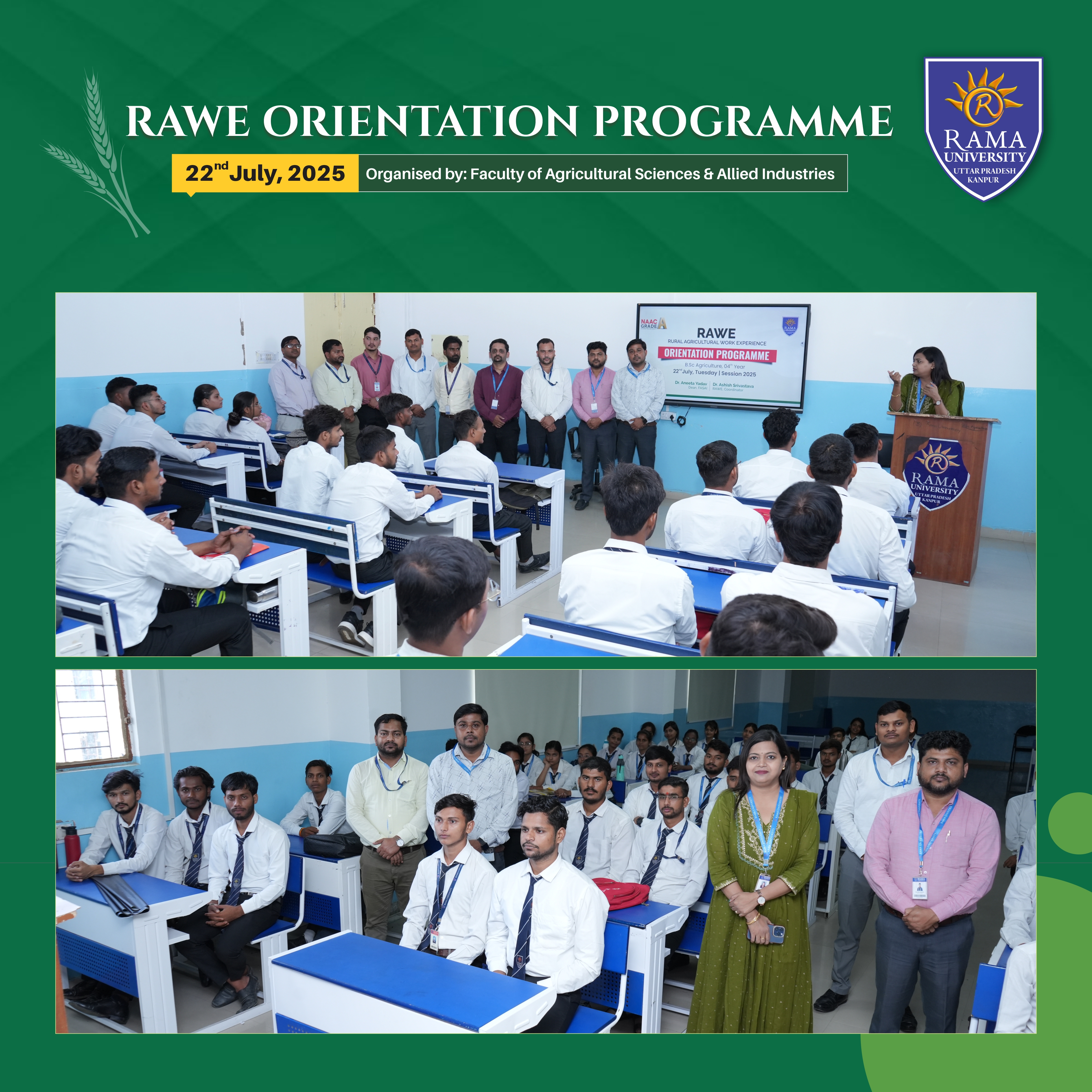
The RAWE Orientation Programme was organized to formally brief the students on the objectives, modules, methodologies, timelines, and expectations of the RAWE component, which forms a major part of the final-year curriculum. Student READY programme was launched by the Hon’bla Prime Minister of India on 25 July, 2015.The programme commenced with a welcome address by Dr. Aneeta Yadav, Dean, FASAI. The Dean emphasized the importance of ground-level agricultural exposure in shaping a student's holisticunderstanding. A detailed presentation was delivered on the RAWE structure and modules as per ICAR norms. Each segment—Village Stay, Diagnostic Visits, Crop Production Programme (CPP), NGO/Institutional Attachment, and Agro-industrial Training—was elaborated upon.Experts from Krishi Vigyan Kendras (KVKs), Agricultural Extension Officers, and past alumni shared their RAWE experiences, field challenges, and tips to manage data collection, farmer interviews, and field diaries effectively.Students actively participated and posed questions related to village selection, documentation procedures, field safety, and interaction with farm families.
Outcomes of the Programme:
- Students gained a complete understanding of RAWE programme structure and objectives.
- The orientation boosted the confidence of students to approach their field assignments diligently and ethically.
- It created a bridge between classroom learning and community-based application.
- Students were motivated to contribute meaningfully to rural agriculture and extension.
The RAWE Orientation Programme successfully aligned with the ICAR’s vision of producing job-ready, socially responsible agricultural graduates. It marked the beginning of an immersive learning journey that will expose students to the realities of rural India, enable them to identify local problems, and develop context-specific agricultural solutions. Overall it was a successful event